
Concrete production solutions
Complete plant solutions for ready-mix concrete, construction sites and precast production — from design to commissioning.
From the requirement to concrete output — one project approach
Establishing the capacity required, laying out the plant, selecting the mixer and batching system, supplying the equipment, installing and commissioning it — every stage coordinated together. That is how the project ends up matching the site and the production requirement.
 Project-specific
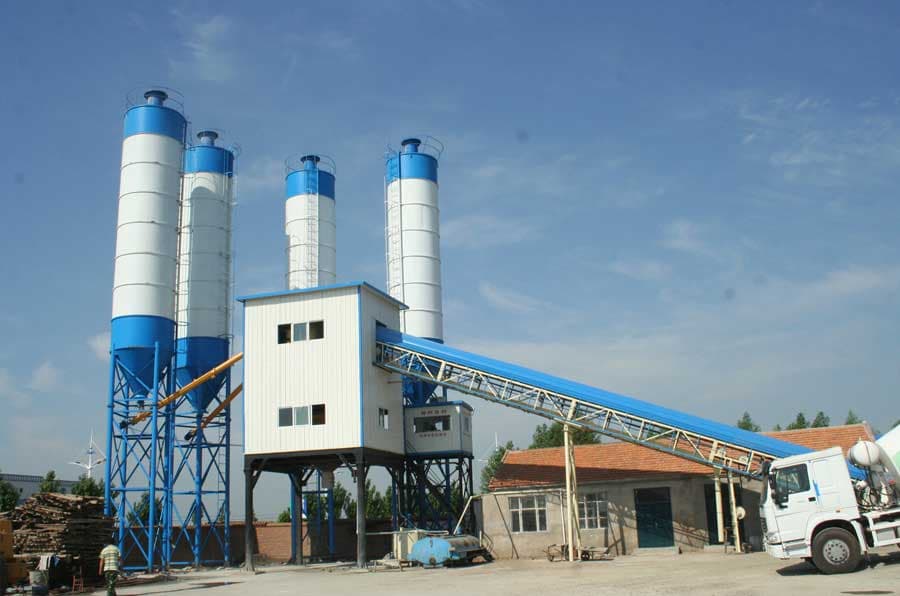
Commercial ready-mix concrete production
A commercial ready-mix plant should be configured around order flow, peak-hour demand, the number of concrete recipes and truck-mixer circulation. The final plant model and theoretical capacity are selected only after the project data are confirmed. Actual output depends on the recipe, mixing time, aggregate moisture…
- Capacity selected from order flow and peak dispatch demand
- Configuration for multiple recipes and material streams
- Integrated planning of silos, screw conveyors, dosing and control
- Expansion and maintenance reserve built into the layout
 Project-specific
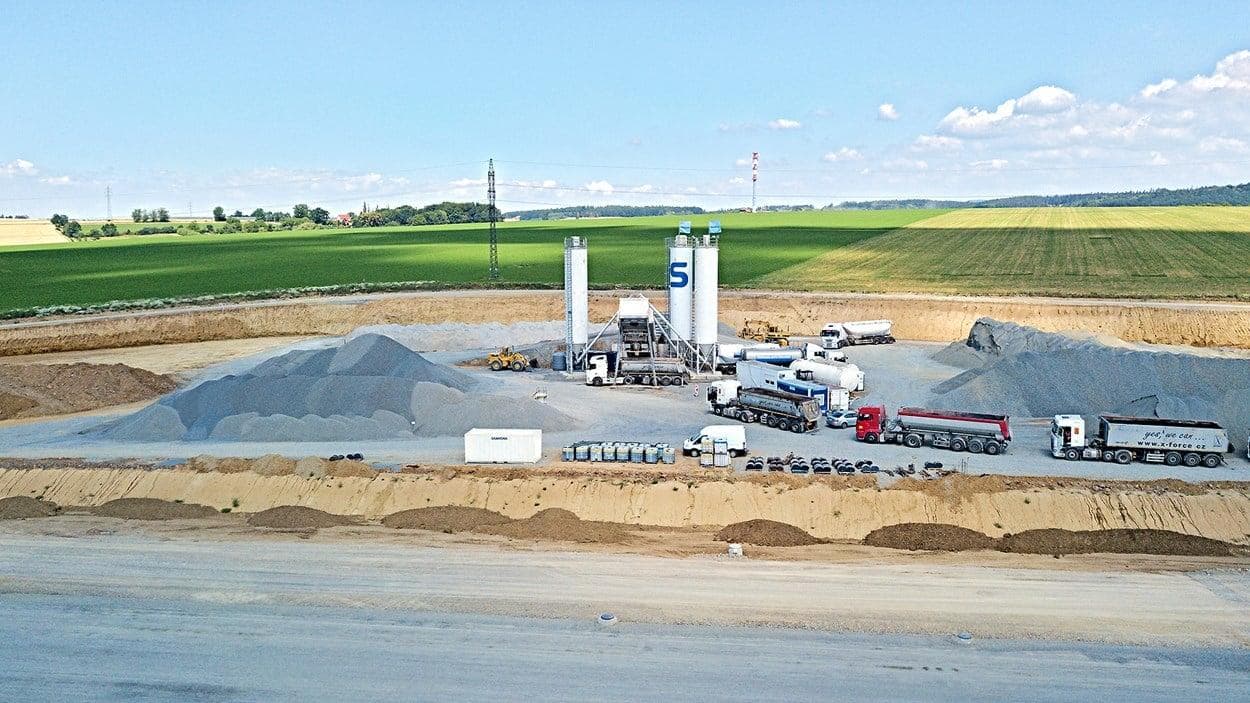
Concrete production for roads, bridges and infrastructure
Infrastructure concrete production must be engineered around approved mix designs, placement schedules, quality-control procedures and the site logistics of each work front. Plant capacity is selected from the peak placement rate and continuity requirement rather than from nominal hourly output alone. Project…
- Capacity matched to peak placement and transport cycle
- Recipe control and batch traceability for project QA
- Stationary, mobile or compact layouts for site conditions
- Heating, cooling and environmental options selected by specification
 Project-specific
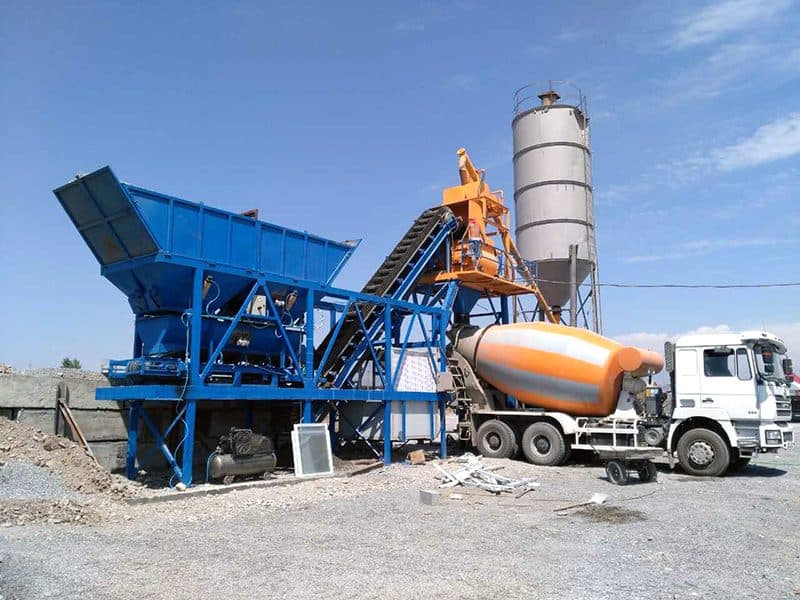
On-site and temporary concrete production
On-site concrete production is used when transport distance, access restrictions, moving work fronts or a limited project duration make supply from a permanent ready-mix plant inefficient. The plant must be selected together with its transport modules, installation method, material storage and relocation plan. Project…
- Configuration selected from relocation frequency and project duration
- Modular equipment for faster installation and recommissioning
- Shorter concrete transport distance to the work front
- Transport, utilities and temporary-site works planned together
 Project-specific
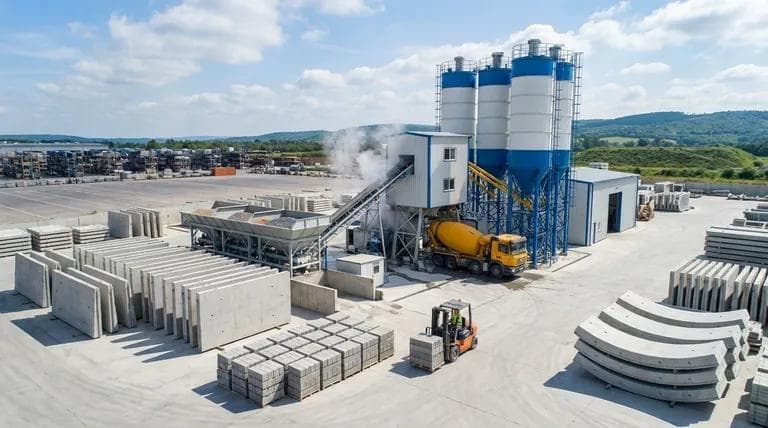
Precast concrete production solution
A precast concrete batching system must be synchronized with mould preparation, reinforcement, casting, compaction and curing. The plant is therefore configured around product families, batch size, cycle time and the concrete transport method inside the factory—not around theoretical hourly capacity alone. Factory…
- Mixer and batch size matched to mould and line cycles
- Moisture correction and repeatable multi-material dosing
- Internal concrete transport engineered with the plant
- Recipe security, batch records and production-line coordination
Concrete plant enquiry
Tell us the capacity you need and the project conditions — we will work out the right configuration with you.