
Commercial ready-mix concrete production
About this solution
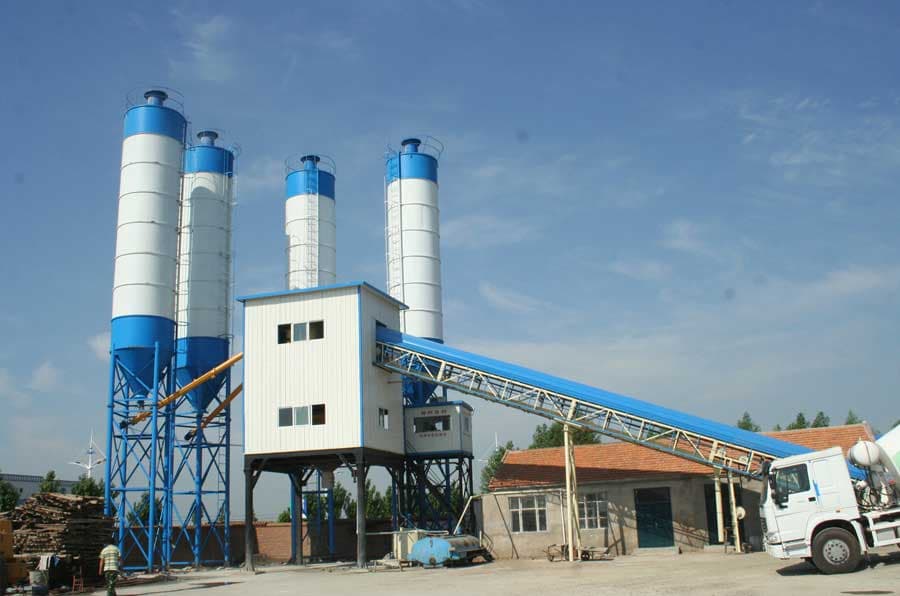
A commercial ready-mix plant should be configured around order flow, peak-hour demand, the number of concrete recipes and truck-mixer circulation. The final plant model and theoretical capacity are selected only after the project data are confirmed. Actual output depends on the recipe, mixing time, aggregate moisture and dispatch logistics.
Customer situation and production objective
This solution is intended for producers that supply multiple concrete grades to external customers. The objective is to organize a production system that can schedule orders, handle several recipes, control material consumption and load truck mixers with minimal interruption.
Information required for engineering
Average and peak hourly demand, daily output and working shifts.
Concrete grades, target slump and special mix requirements.
Aggregate fractions, maximum particle size and expected moisture variation.
Number of cementitious materials and types of chemical admixture.
Truck-mixer fleet, loading cycle and internal traffic plan.
Available site area, electrical supply, water, compressed air, climate and environmental requirements.
Plant type and capacity-selection logic
For long-term, regular commercial production, a stationary wet-mix plant is normally the primary option. Capacity should be selected from peak dispatch demand, batch-cycle time, truck arrival intervals, maintenance reserve and future expansion—not from daily sales volume alone. Dry-mix or compact arrangements should be evaluated only when the final mixing method, site constraints and local requirements support them.
Production process
Aggregates are stored in separate bins and weighed to the selected recipe.
Cement and other powders are conveyed from the silos to dedicated scales.
Water and chemical admixtures are measured through separate dosing circuits.
All components are charged to the mixer in the programmed sequence.
The batch is mixed for the recipe-defined time.
Finished concrete is discharged into a truck mixer and dispatch data are recorded.
Dust and wash-water systems operate according to the approved project scope.
Recommended equipment and configuration
System | Recommendation | Selection status |
|---|---|---|
Batching plant | Stationary wet-mix; alternative layouts subject to site conditions | Final selection required |
Mixer | Forced-action mixer sized for the mix design and batch cycle | Model and volume to be confirmed |
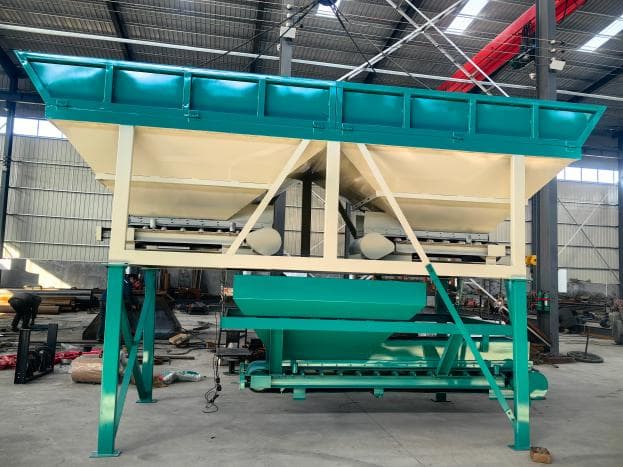
Aggregate system | Bins and weighing circuits matched to the required fractions | Quantity and volume to be confirmed |
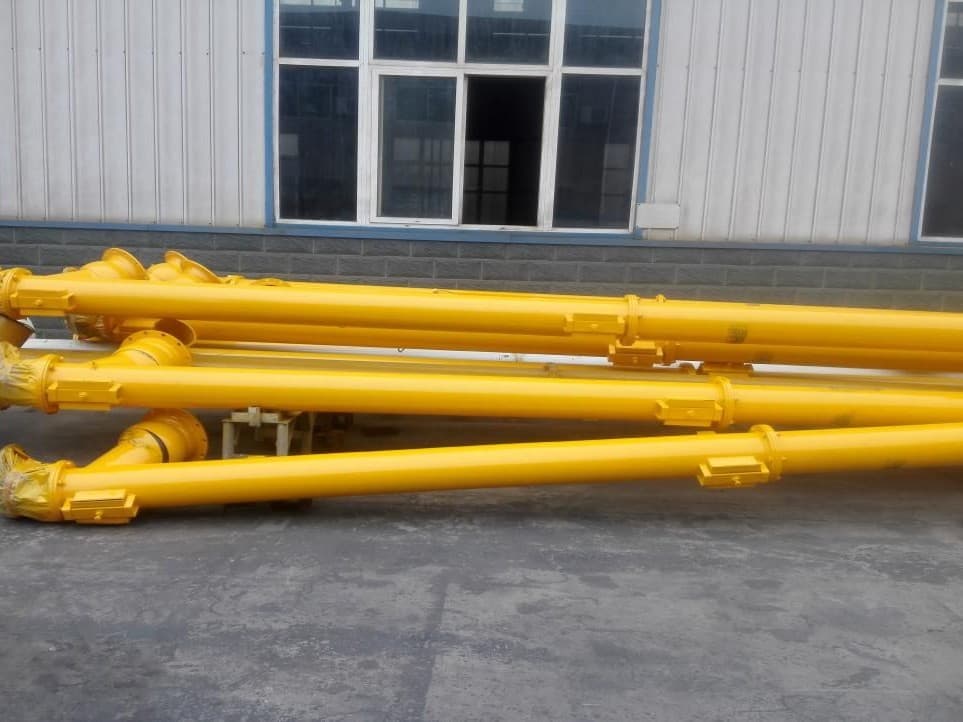
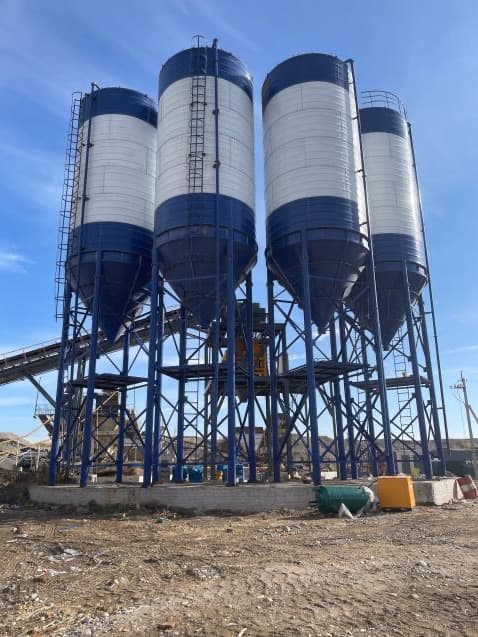
Powder system | Silo, screw conveyor and weighing circuit for each binder | Project-specific |
Water and admixtures | Separate dosing circuits | Defined by the recipes |
Control system | Recipe, batch and material-consumption records | Functions to be confirmed |
Environmental systems | Dust collection and wash-water management | According to local requirements |
Why this configuration works
Sizing the plant around the peak dispatch cycle reduces queues and idle time.
Separate storage and dosing improve control when changing between recipes.
Recipe and batch records simplify production and material-consumption tracking.
Expansion allowance makes it possible to evaluate additional silos, bins or a second production line later.
Site, foundation, utilities and logistics
The layout must provide separate routes for raw-material deliveries, wheel-loader movement and truck-mixer entry and exit, together with drainage and maintenance access. Foundations are designed from the geotechnical report and equipment loads. Available power, voltage and frequency, water source, compressed air and winter-operation conditions must be confirmed before ordering.
Options and limitations
Additional binder silos, more aggregate fractions, supplementary dosing circuits, fibre dosing, heating or cooling systems, enclosed cladding, wash-water recycling and a second mixing line can be evaluated as project options. They are not assumed to be part of a standard package.
Delivery, installation and commissioning
The commercial offer should state the supply boundary, foundation drawings, installation supervision, electrical connection work, commissioning, operator training and initial spare-parts package separately.
Frequently asked questions
What plant capacity is required?
It is calculated from peak-hour dispatch, the mixing cycle and truck-mixer turnaround—not daily output alone.
Is the number of cement silos standard?
No. Silo quantity and capacity depend on binder types, required stock duration and delivery logistics.
Can the plant operate in winter?
Yes, when heating, insulation and enclosure systems are engineered for the confirmed climate conditions.
Does actual production equal theoretical capacity?
Not always. Recipe, material moisture, mixing time, operator practice and transport logistics all affect real output.
Request a configuration
Send the required hourly and daily output, concrete types, aggregate fractions, binders, site dimensions, electrical standard, silo requirements and target commissioning date.
- Capacity selected from order flow and peak dispatch demand
- Configuration for multiple recipes and material streams
- Integrated planning of silos, screw conveyors, dosing and control
- Expansion and maintenance reserve built into the layout
Recommended products
Cannot find the product you need?
Leave your phone number and our specialist will call you back and recommend the right product.