
Precast concrete production solution
About this solution
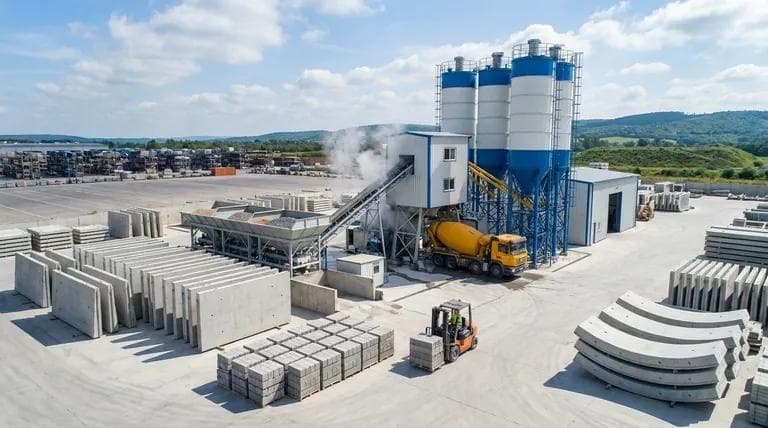
A precast concrete batching system must be synchronized with mould preparation, reinforcement, casting, compaction and curing. The plant is therefore configured around product families, batch size, cycle time and the concrete transport method inside the factory—not around theoretical hourly capacity alone.
Factory objective and production conditions
This solution is intended for plants producing structural elements, wall panels, beams, columns, pipes, blocks, paving products and other precast components. The objective is repeatable recipe execution, short and predictable batch cycles, controlled moisture and efficient delivery of concrete to each production line.
Information required for engineering
Product types, mould volumes, casting schedule and number of production lines.
Concrete grades, workability, pigment, fibre and special admixture requirements.
Required batch size, peak hourly demand and acceptable waiting time at the mould.
Aggregate fractions, maximum size, moisture range and sand-correction method.
Concrete transport method: skip, flying bucket, belt, agitator or truck mixer.
Indoor or outdoor installation, utilities, temperature-control and dust requirements.
Plant and mixer selection logic
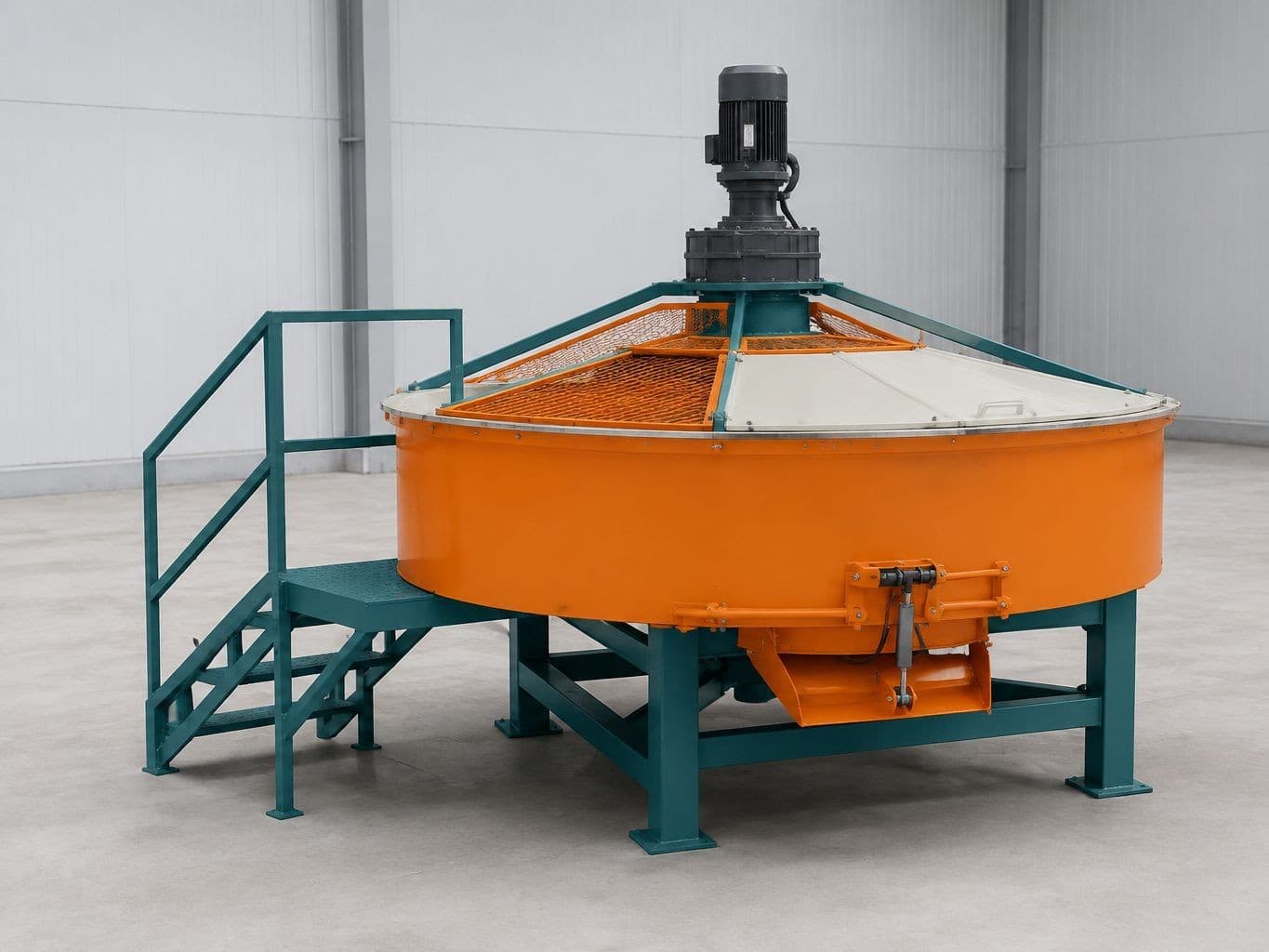
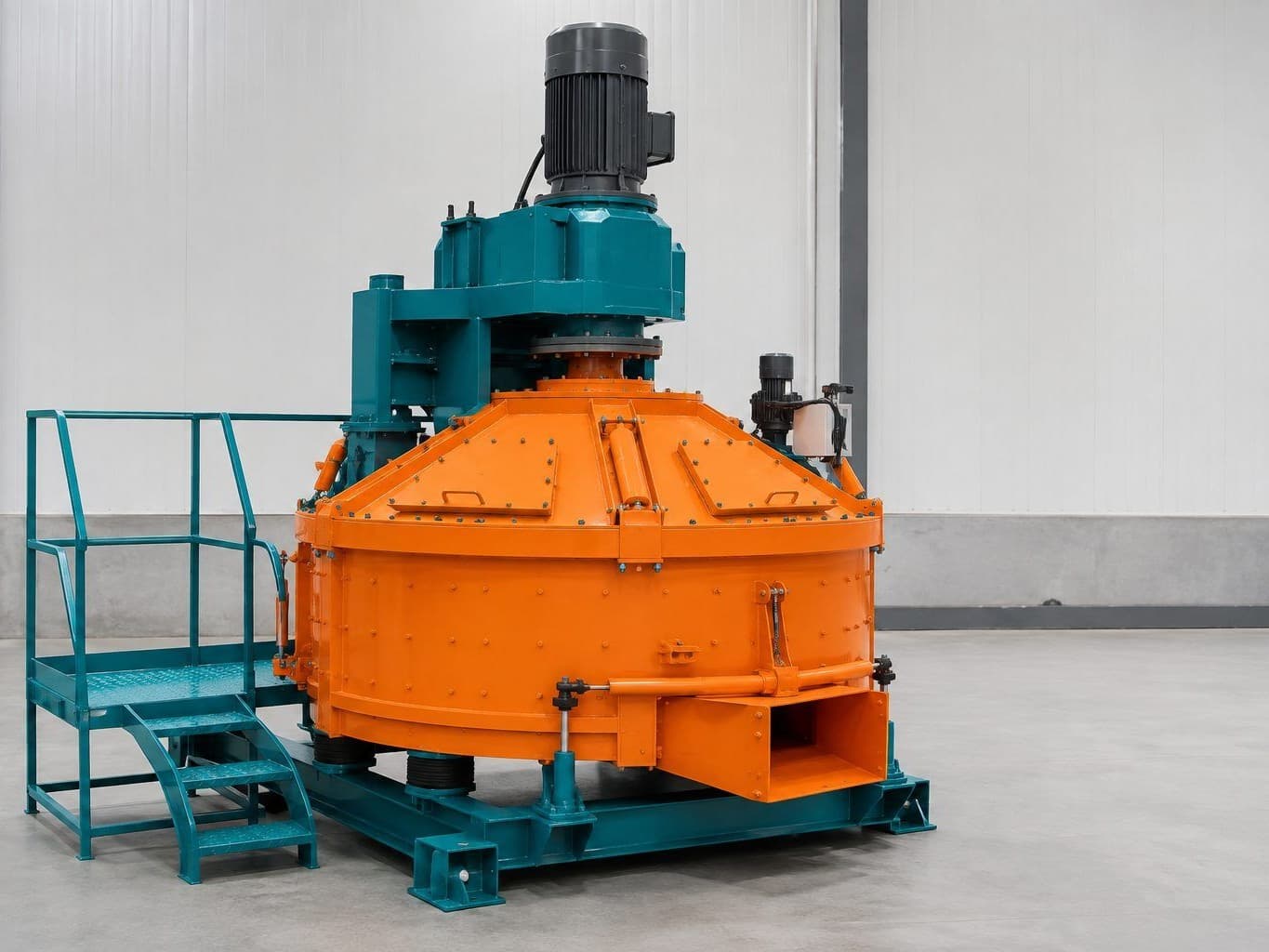
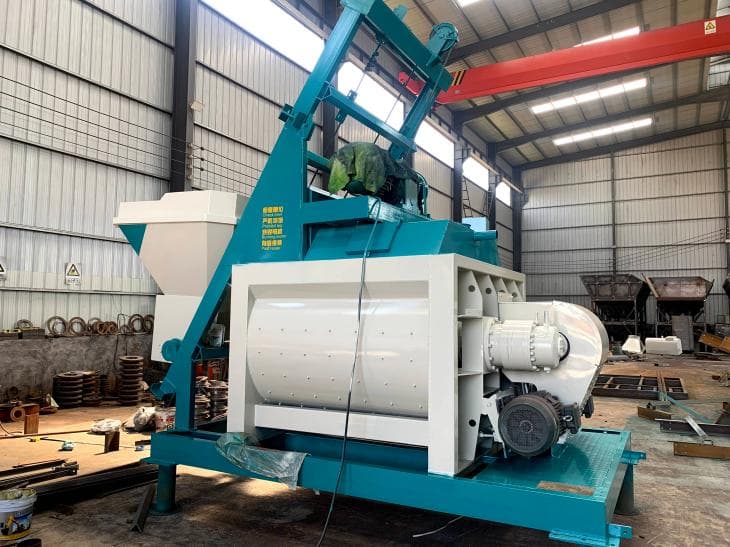
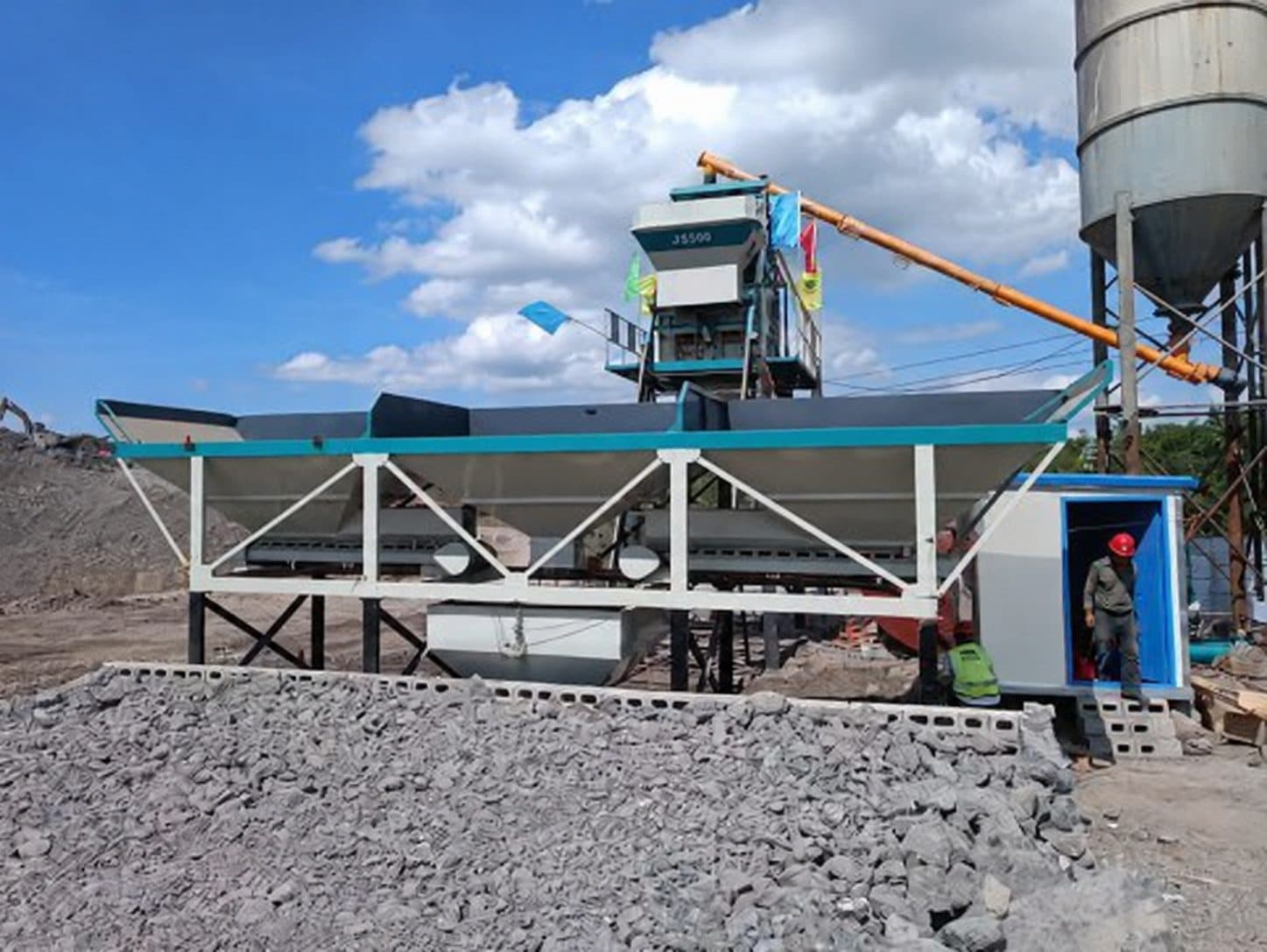
A compact stationary wet-mix plant is commonly used because the production base is fixed and internal transport distances are short. A twin-shaft mixer suits many structural and general precast recipes; planetary or other forced-action mixers can be evaluated for specialized mixes, coloured concrete or very uniform distribution requirements. Mixer volume should match mould batches and transport-container capacity to minimize residual concrete and unnecessary partial batches.
Production process
Aggregates are stored by fraction and moisture is monitored.
The control system selects the approved product recipe and target batch size.
Aggregates, cementitious materials, water, admixtures, pigment or fibres are dosed through the configured circuits.
Materials are charged and mixed for the recipe-defined sequence and time.
Concrete is discharged into the factory transport system.
The batch is delivered to the scheduled mould or production line.
Batch data and material consumption are recorded for traceability.
Recommended configuration
System | Engineering requirement | Typical solution |
|---|---|---|
Mixer | Product recipe, uniformity and batch size | Twin-shaft or specialized forced-action mixer |
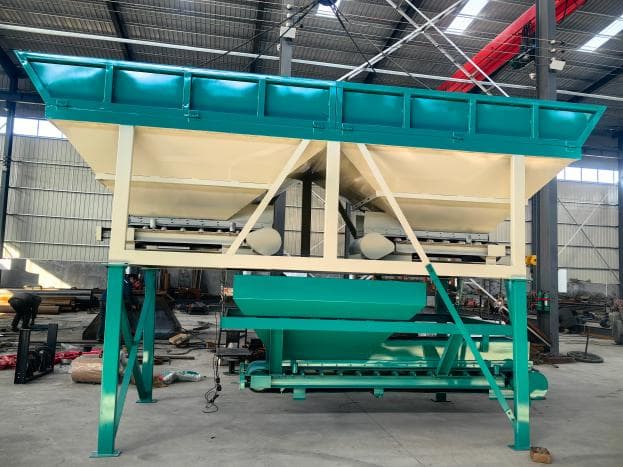
Aggregate dosing | Small-batch repeatability and moisture variation | Separate bins, scales and moisture correction |
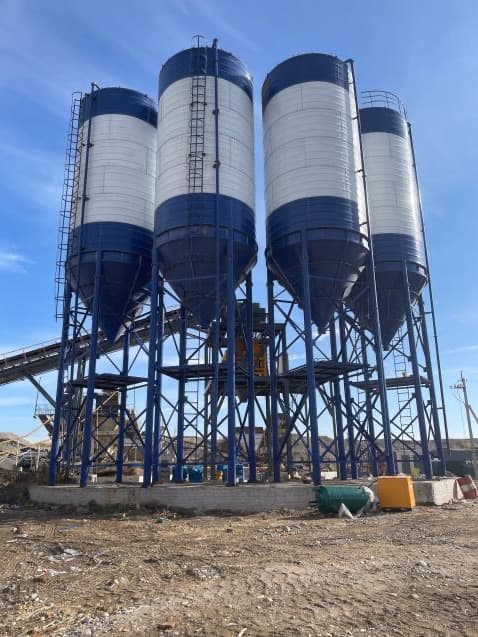
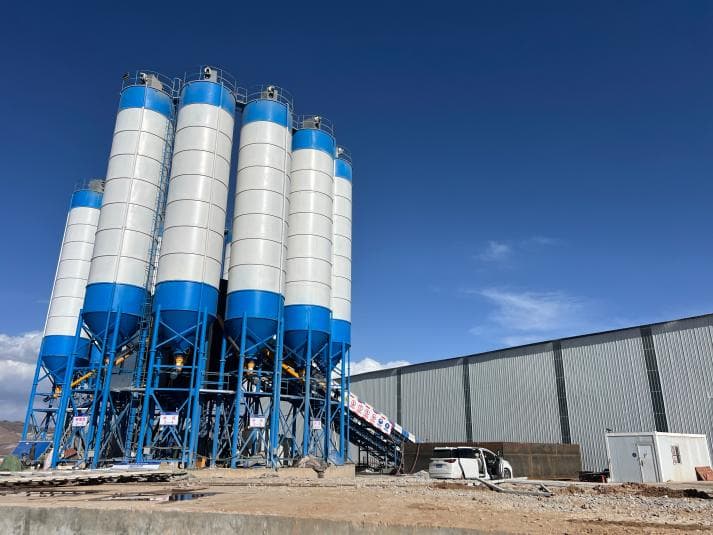
Powder dosing | Multiple binders and fillers | Dedicated silo, screw and weighing circuits |
Special additives | Fibres, pigment or microsilica where specified | Project-specific dosing equipment |
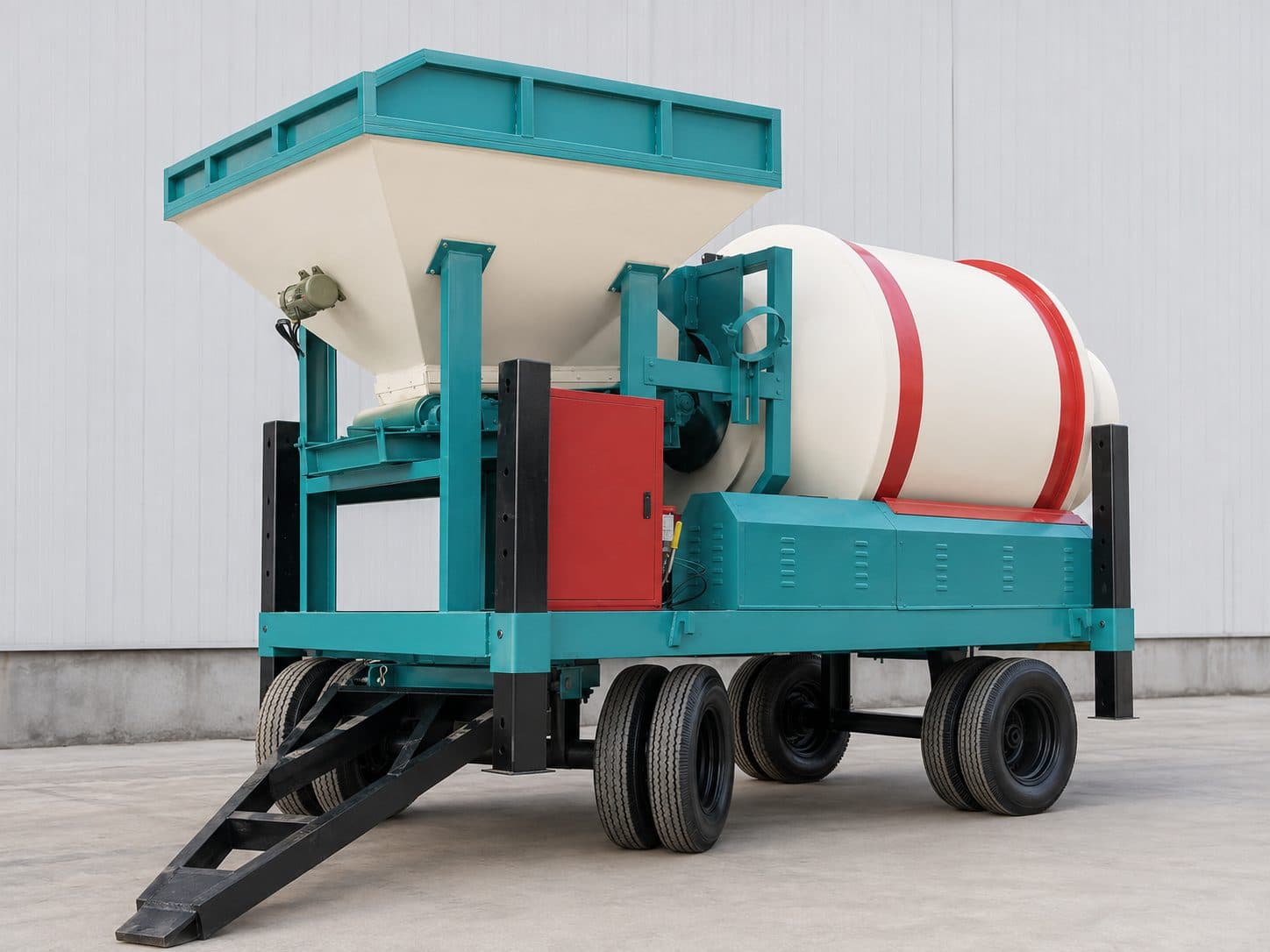
Concrete transport | Distance, route and production-line cycle | Skip, flying bucket, belt or agitator |
Control system | Recipe security, batch records and line coordination | Centralized automatic control |
Why this configuration works
Matching batch size to the mould and transport container reduces residue and cycle losses.
Moisture correction improves consistency where sand moisture varies.
Dedicated small-material dosing supports pigments, fibres and special admixtures.
Production records link each batch to its product recipe and casting schedule.
Factory layout and utilities
The plant location should minimize the travel route to the moulding lines while preserving access for aggregates, cement tankers and maintenance. The layout must coordinate overhead buckets, skips or belts with building columns and crane zones. Power, water, compressed air, drainage, washout treatment and winter heating are confirmed before final engineering.
Concrete transport and line coordination
The internal delivery system is a critical part of the solution. Its payload, speed, route, discharge method and cleaning arrangement must match the mixer output and the consumption cycle of every line. Buffer capacity can be evaluated, but excessive waiting should be avoided for low-slump or fast-setting mixes.
Options and limitations
Moisture probes, pigment scales, fibre dosing, additional admixture circuits, automatic sampling, temperature control, high-pressure washout and integration with factory production software are available as options. Their suitability depends on the actual products and process.
Maintenance and quality control
Regular inspection of mixer liners, arms and discharge gates is especially important where abrasive or low-slump mixes are used. Scales and moisture probes require scheduled calibration. Cleaning procedures should prevent colour or recipe carryover between batches.
Frequently asked questions
Which mixer is best for precast concrete?
The answer depends on batch size, workability, aggregate size, uniformity and special-material requirements. A twin-shaft mixer is common, while specialized forced-action mixers may suit demanding recipes.
Is theoretical hourly capacity the main selection factor?
No. Mould cycle, batch size and internal concrete transport often determine the required plant configuration more directly.
Can the control system connect to factory planning software?
Integration can be evaluated after the required data interface, recipe control and reporting functions are defined.
Request a configuration
Provide the precast product list, mould and line cycles, concrete recipes, target batch size, internal transport method, factory layout and utility data.
- Mixer and batch size matched to mould and line cycles
- Moisture correction and repeatable multi-material dosing
- Internal concrete transport engineered with the plant
- Recipe security, batch records and production-line coordination
Recommended products
Cannot find the product you need?
Leave your phone number and our specialist will call you back and recommend the right product.