
Concrete production for roads, bridges and infrastructure
About this solution
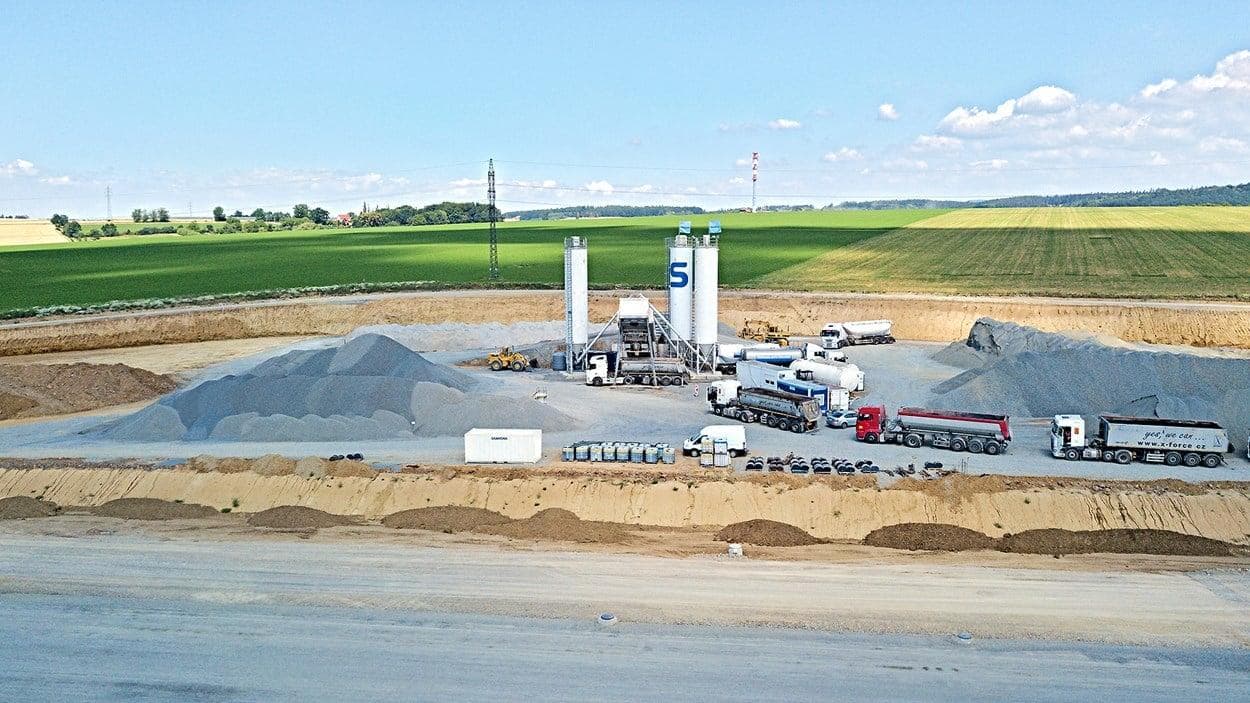
Infrastructure concrete production must be engineered around approved mix designs, placement schedules, quality-control procedures and the site logistics of each work front. Plant capacity is selected from the peak placement rate and continuity requirement rather than from nominal hourly output alone.
Project conditions and production objective
This solution supports highways, bridges, airports, railways, tunnels, hydraulic structures and other infrastructure works where concrete delivery must remain synchronized with paving, pumping or structural placement. The main objective is stable recipe execution, traceable batches and reliable supply during critical pours.
Engineering information required
Concrete classes, exposure classes, slump or workability range and durability requirements.
Maximum and peak placement rates, working shifts and planned continuous-pour duration.
Aggregate fractions, grading, maximum size, moisture variation and temperature.
Cementitious materials, admixtures, fibres, ice or chilled-water requirements.
Distance from the plant to each work front and the available truck-mixer fleet.
Site area, geotechnical data, power, water, climate and environmental constraints.
Plant selection logic
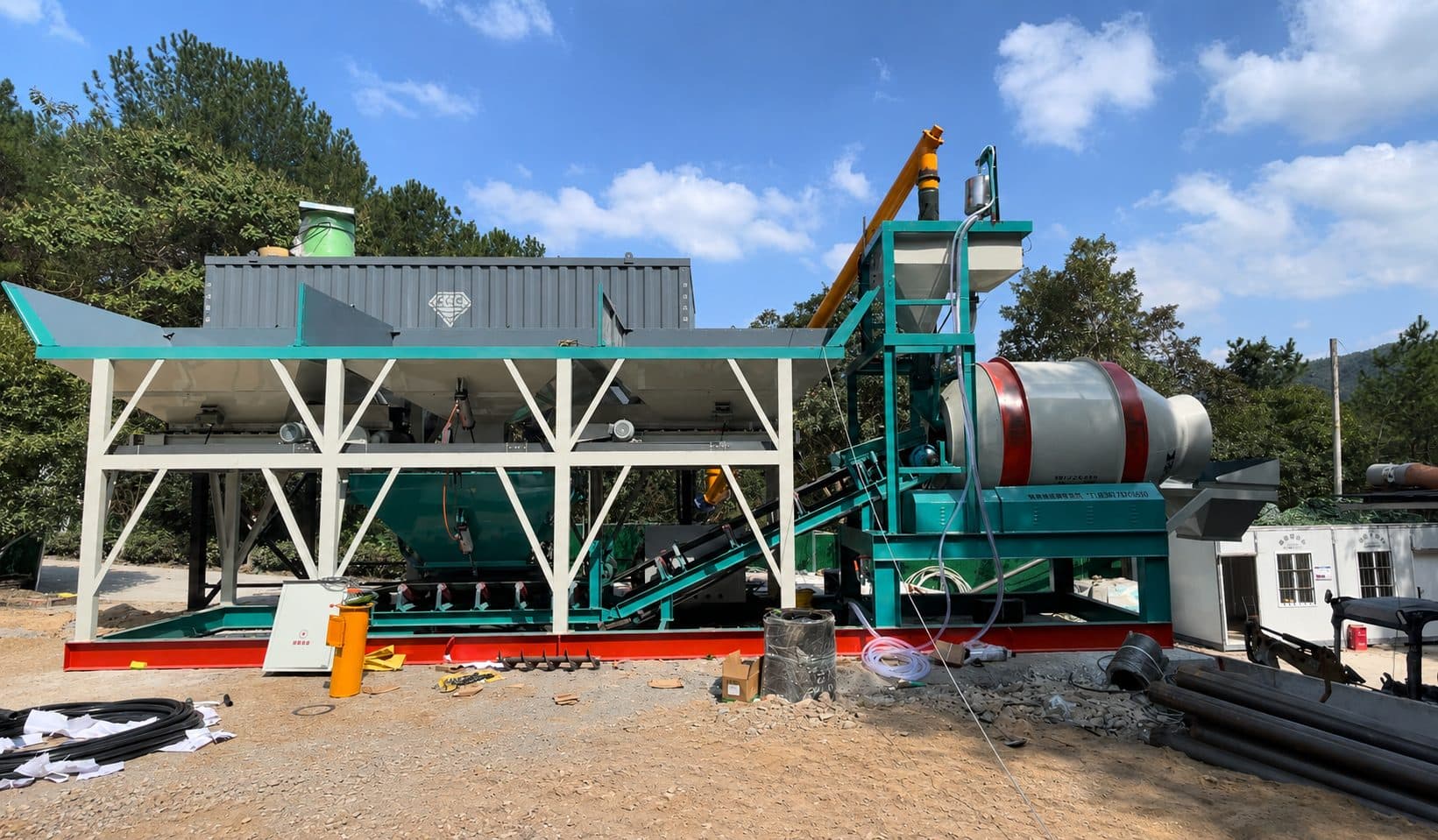
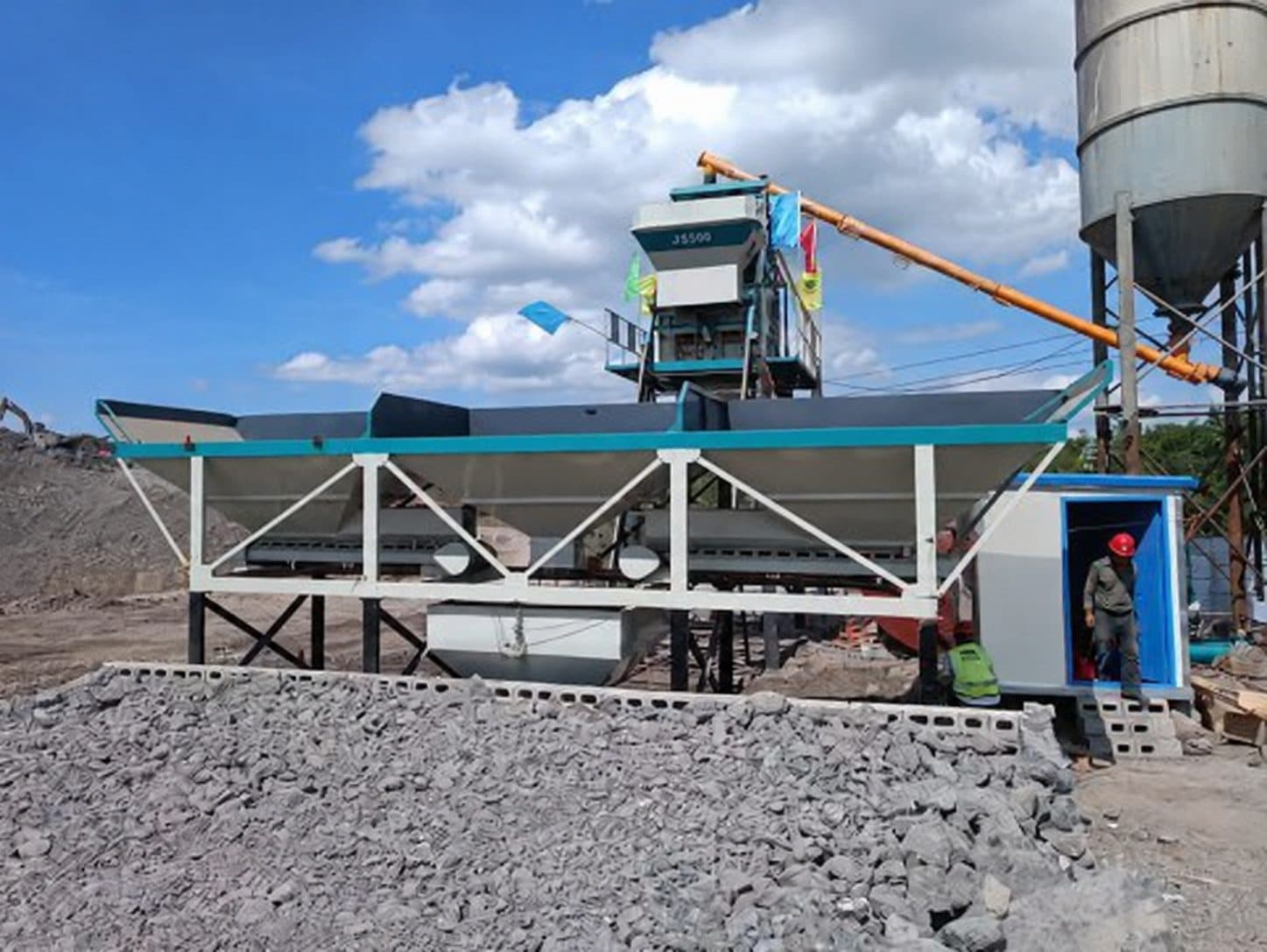
A stationary wet-mix plant is normally preferred for a long project with a fixed production base. A mobile or compact plant can be more suitable where work fronts move, installation time is limited or civil works must be reduced. The mixer, storage and dosing systems must be selected for the most demanding approved mix, while capacity includes reserve for loading, quality checks and planned maintenance.
Production and quality-control process
Incoming aggregates and binders are inspected and stored by material type.
Aggregate moisture is measured and the recipe water is corrected where required.
Aggregates, powders, water and admixtures are weighed through dedicated circuits.
Materials are charged in the approved sequence and mixed for the specified time.
Batch records are generated for traceability.
Workability and other required tests are completed under the project quality plan.
Concrete is dispatched according to placement sequence and travel-time limits.
Recommended configuration
System | Engineering consideration | Typical option |
|---|---|---|
Plant layout | Project duration, relocation and site constraints | Stationary, mobile or compact wet-mix |
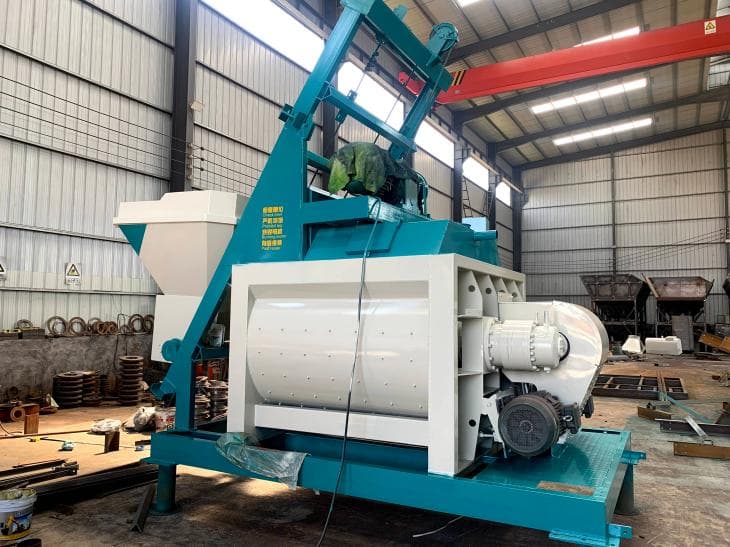
Mixer | Concrete grade, aggregate size and mixing-time requirement | Twin-shaft forced-action mixer |
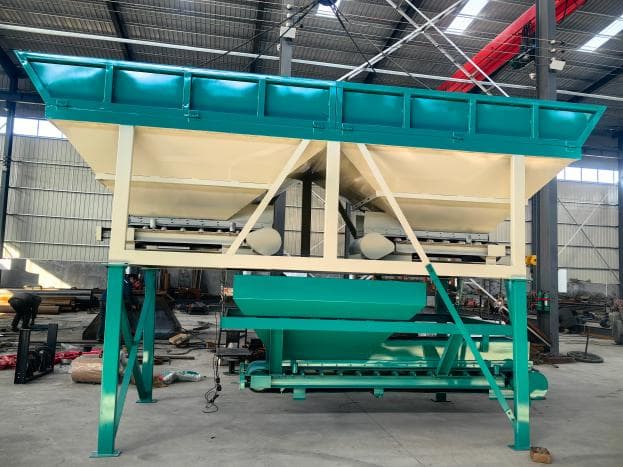
Aggregate system | Number of fractions and moisture variation | Separate bins with controlled weighing |
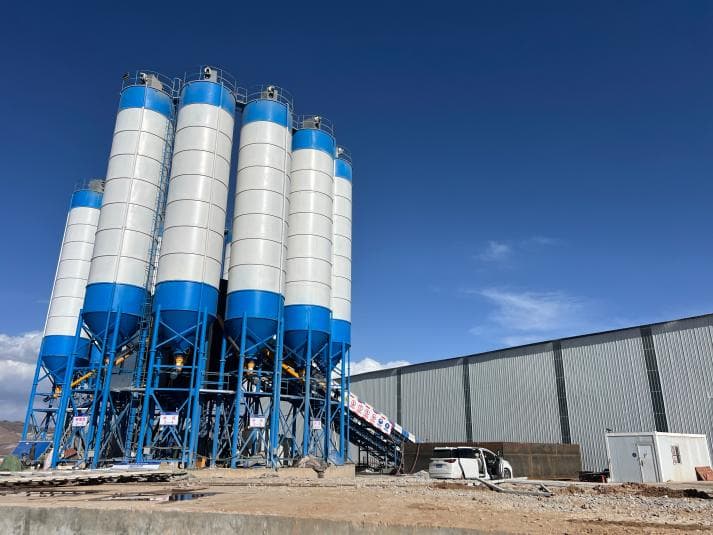
Powder system | Number of binders and required stock reserve | Dedicated silos, screws and scales |
Temperature control | Ambient conditions and placement-temperature limits | Heating, chilled water or ice as required |
Control and records | Approved recipes, batch traceability and alarms | Centralized automatic control |
Key engineering advantages
Configuration is tied to the actual placement program and transport cycle.
Separate dosing circuits support precise multi-material recipes.
Automatic records simplify quality documentation and batch traceability.
Climate-control options help manage concrete temperature when the specification requires it.
Site and logistics requirements
The layout must provide stable access for cement tankers, aggregate trucks, loaders and truck mixers without crossing critical work zones. Drainage, washout areas, stockpile separation, laboratory access and maintenance clearances should be included. Foundation and anchoring designs are finalized from equipment loads, soil conditions and wind or seismic requirements.
Options and project boundaries
Aggregate moisture sensors, additional powder scales, fibre dosing, ice plants, water chillers, winter enclosures, dust collection, backup power interfaces and a second mixing line are available when justified by the specification. Final responsibilities for civil works, utilities, cranes, installation and local permits must be stated in the supply agreement.
Commissioning and production readiness
Before production, scales are calibrated, interlocks and alarms are tested, trial batches are evaluated and operators are trained. Recommended wear parts and electrical service items should be stocked according to project duration and remoteness.
Frequently asked questions
Should the plant be stationary or mobile?
A stationary plant suits a long fixed base; mobile or compact equipment is evaluated when the work front or production base must relocate.
How much capacity reserve is necessary?
The reserve is calculated from peak placement, transport variability, testing and maintenance requirements; it is not a fixed percentage for every project.
Can low-temperature or hot-weather concrete be produced?
Yes, with a project-specific heating or cooling system designed from the required discharge temperature and local climate.
Request a project configuration
Provide the concrete specification, peak placement rate, project schedule, transport distance, material list, site utilities and climate data for engineering review.
- Capacity matched to peak placement and transport cycle
- Recipe control and batch traceability for project QA
- Stationary, mobile or compact layouts for site conditions
- Heating, cooling and environmental options selected by specification
Recommended products
Cannot find the product you need?
Leave your phone number and our specialist will call you back and recommend the right product.