How Is M300 (B22.5) Concrete Produced?

In Uzbekistan, M300 is commonly paired with strength class B22.5. This designation describes a required result, not a fixed recipe. A mixture that works with one source of cement, sand, coarse aggregate or admixture may perform differently when any of those materials changes. Professional production therefore starts with the project specification and tests on the actual materials—not a “number of cement bags per cubic metre.”
Define the complete requirement first
The B22.5 class alone is insufficient. The laboratory and producer should confirm:
required strength class and test age;
workability or target slump;
frost resistance F and water impermeability W;
structural application and exposure environment;
pumping, placing and consolidation method;
permitted maximum aggregate size;
cement, supplementary material and admixture requirements;
sampling, curing and acceptance procedure.
B22.5 P1 and B22.5 P4 may have the same strength class but different water demand, admixture dosage, pumpability and placing method.
Verify the constituent materials
The cement type, strength class, actual performance, setting behaviour and compatibility with supplementary materials and admixtures are evaluated. Simply increasing cement does not guarantee a stable B22.5 result and may increase paste volume, heat generation, shrinkage and cost.
For sand and coarse aggregate, the producer checks grading, fines and clay contamination, particle shape, strength, density, absorption and moisture. Changes in sand grading or moisture can significantly change water demand and workability.
Mixing water must meet applicable requirements. A compatible plasticizer or water-reducing admixture can provide the required workability at a lower water content, but its dosage must be verified by trials and the supplier’s instructions.
Establish w/cm with production history or tests
The water-to-cementitious-materials ratio is:
w/cm = mass of total mixing water / mass of cementitious materials
Total water includes free surface moisture from the aggregates as well as water introduced by the plant. The target w/cm should not be copied blindly from an online recipe. It is established from reliable previous production data or direct testing with the materials that will actually be used.
From trial batch to production recipe
Calculate initial proportions.
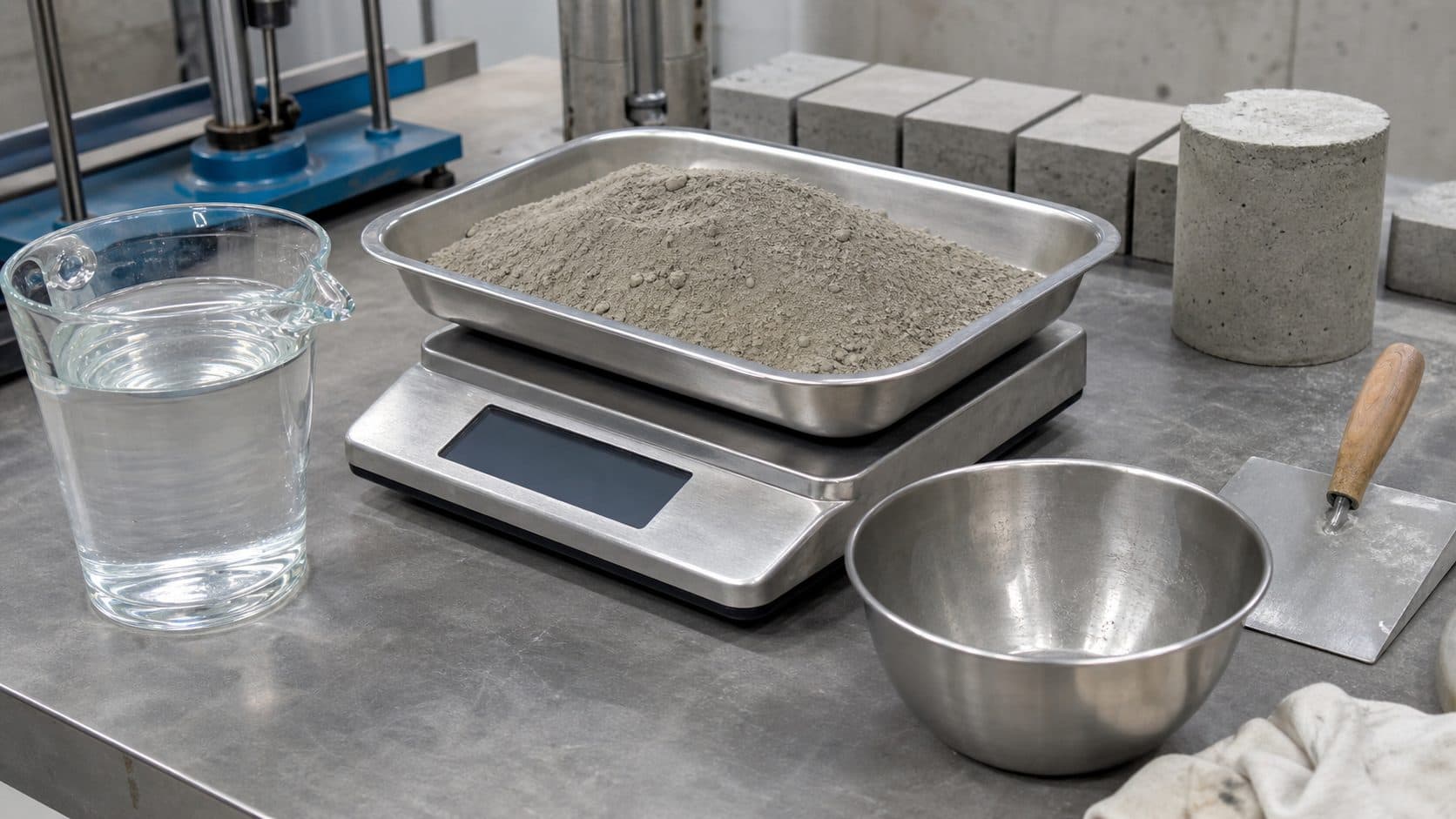
Make trial batches with the actual materials.
Test slump, density, air content and other required fresh properties.
Prepare and cure strength specimens using the specified procedure.
Evaluate strength and variability.
Adjust the mixture for workability, strength and durability.
Transfer the approved recipe to the plant control system with current moisture and density data.
The production target should not be set exactly at the minimum class value. Natural variability requires a suitable required average strength and statistical control.
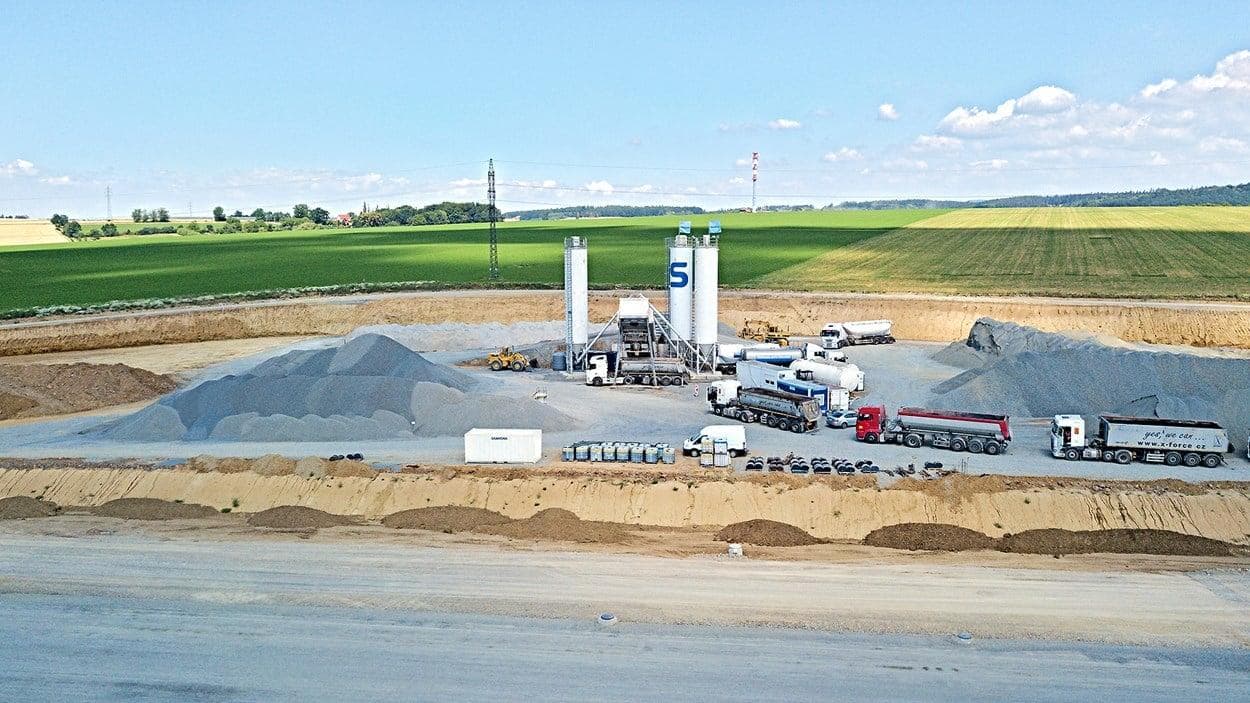
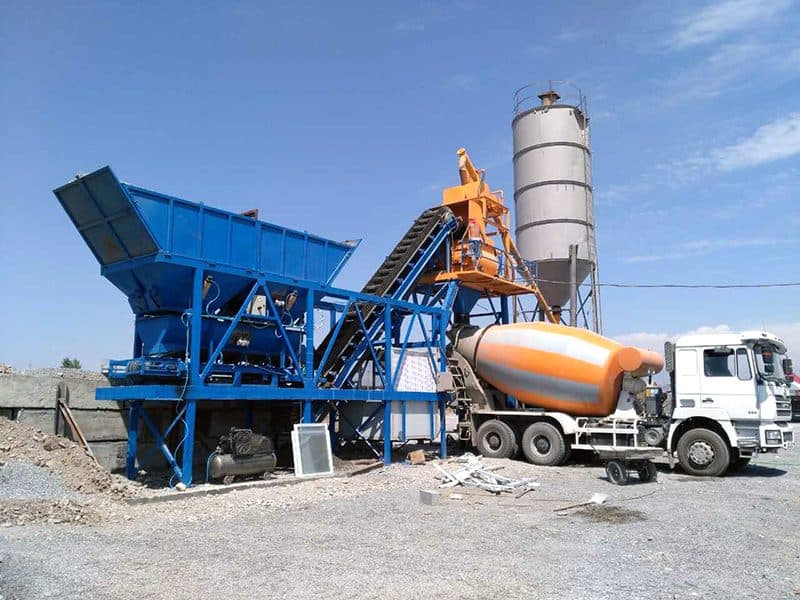
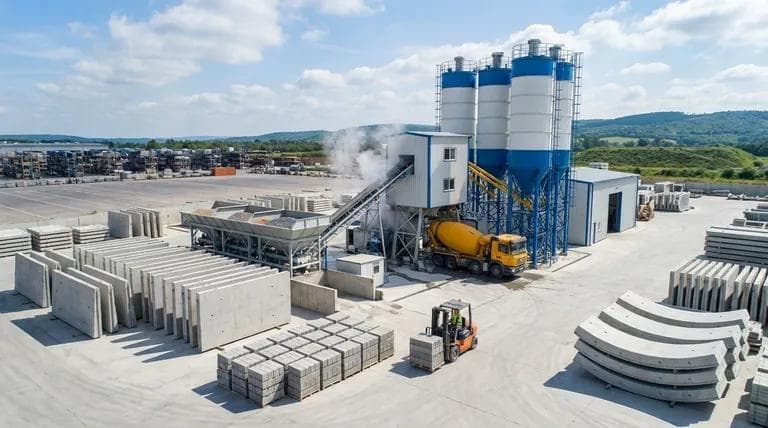
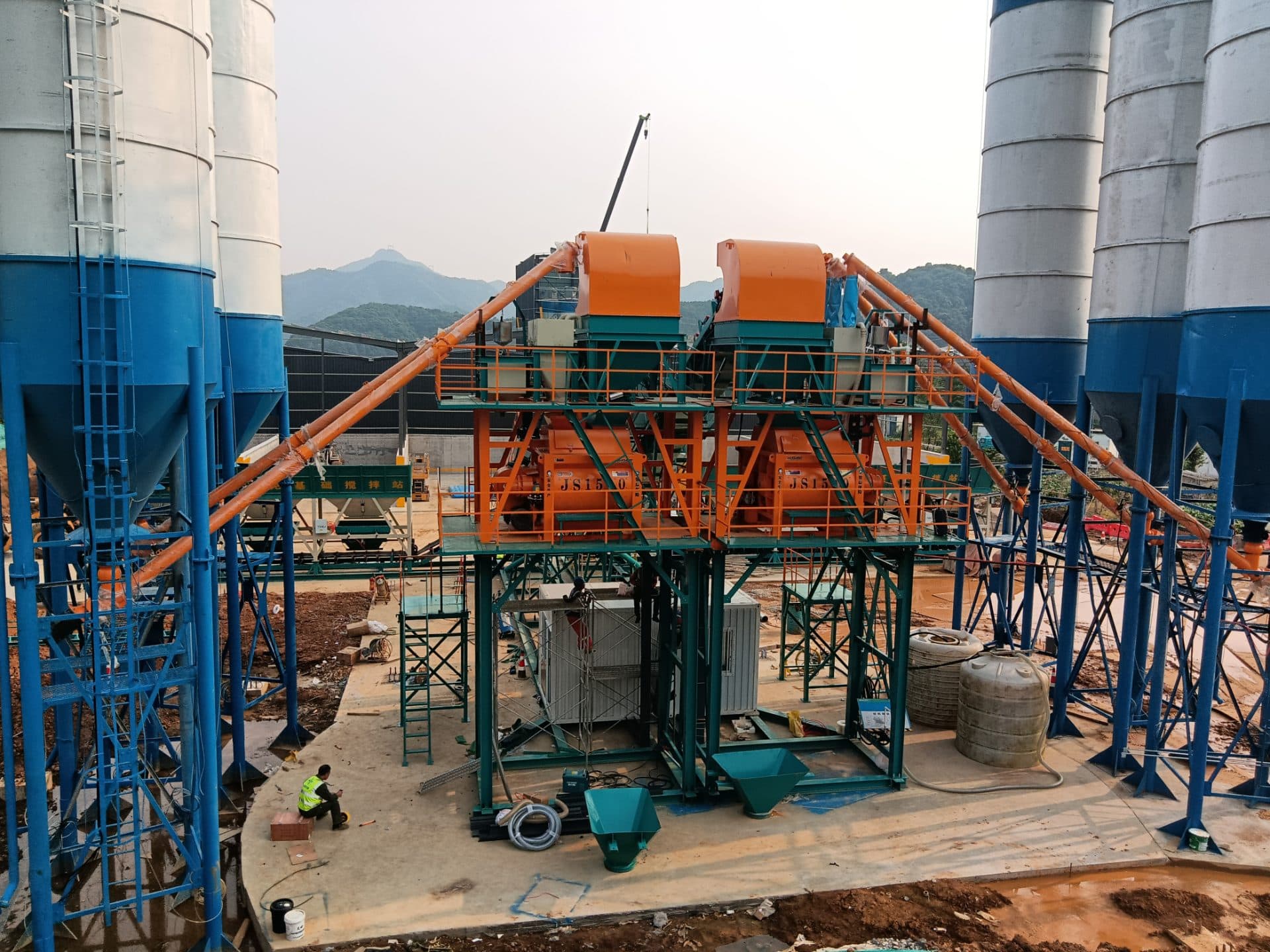
How the batching plant supports repeatability
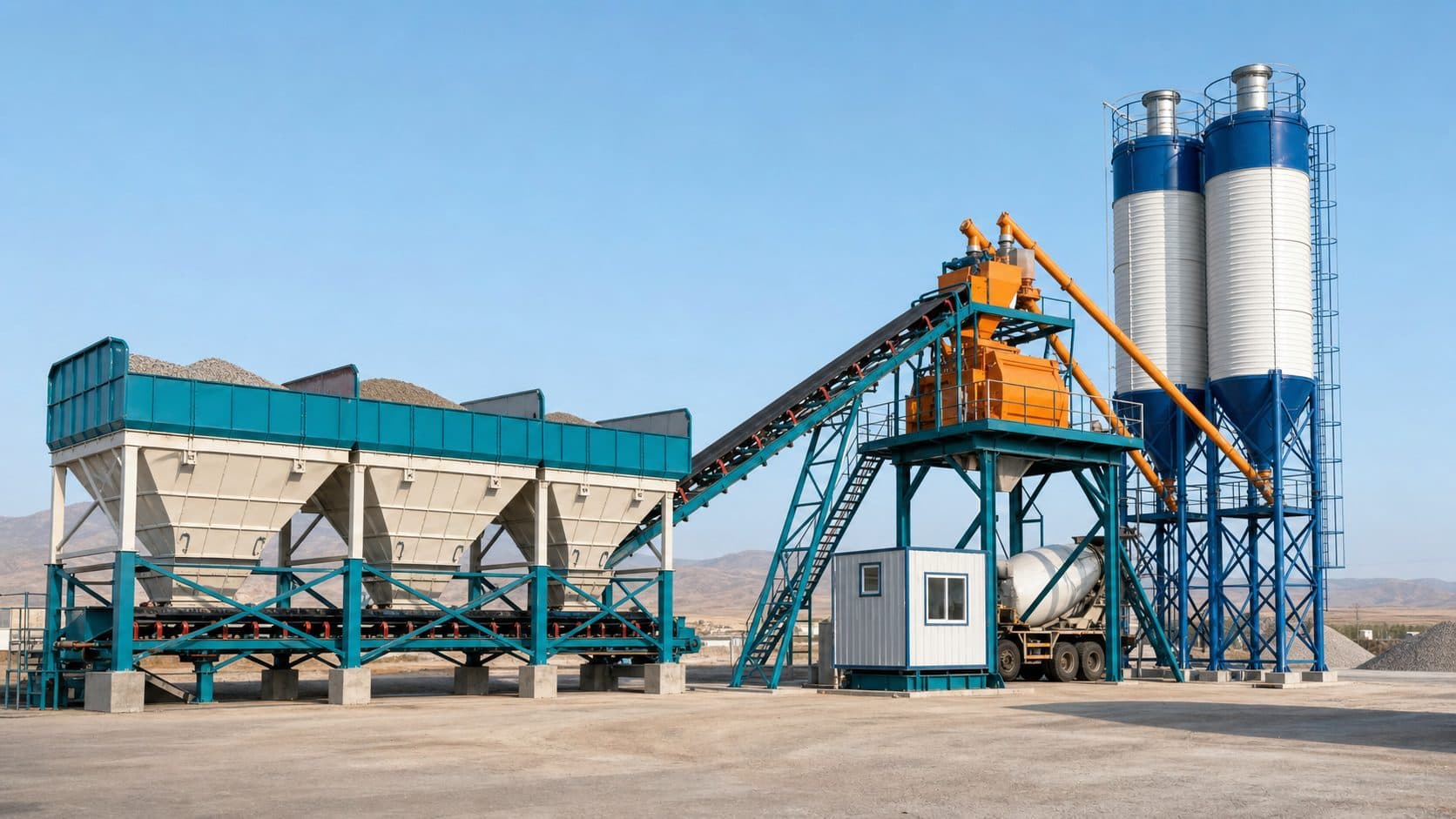
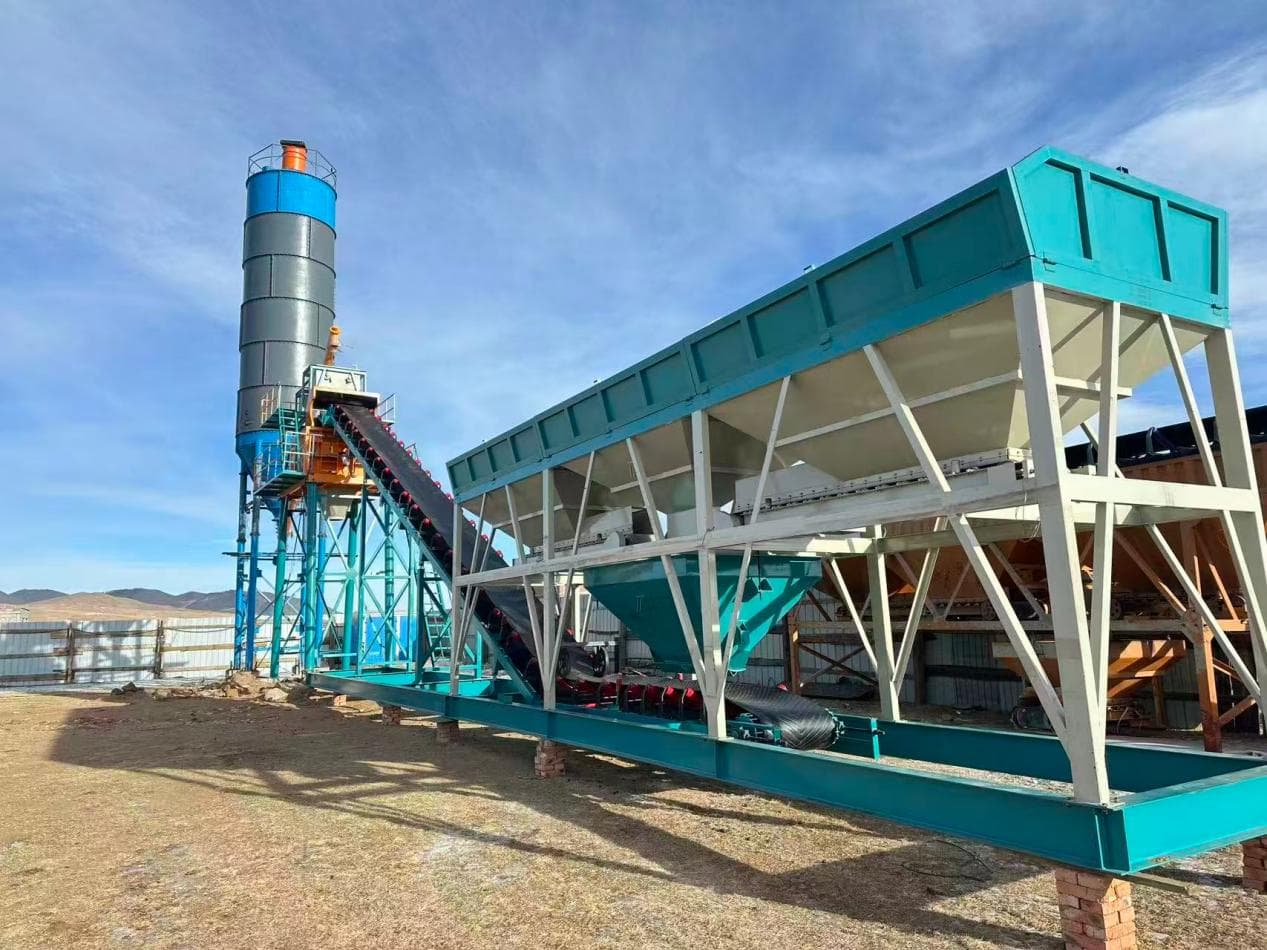
Aggregate fractions are stored separately and protected from contamination.
Scales and dispensers are checked and calibrated.
Sand and coarse-aggregate moisture are measured; both wet aggregate mass and added water are corrected.
Cement, water and admixtures are dosed through their designated systems.
Loading sequence and mixing time follow the approved procedure.
Actual batch quantities and operator adjustments are recorded.
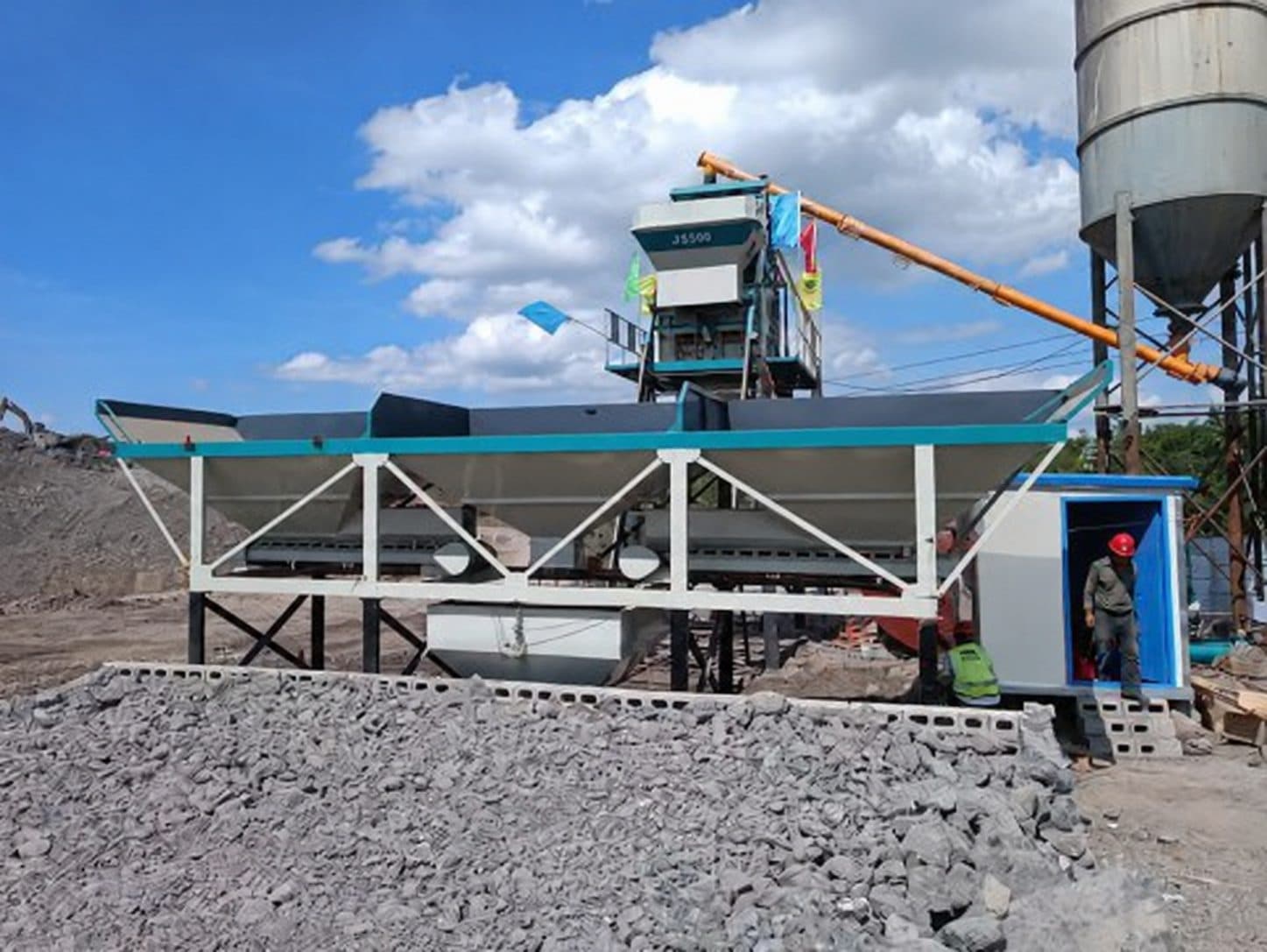
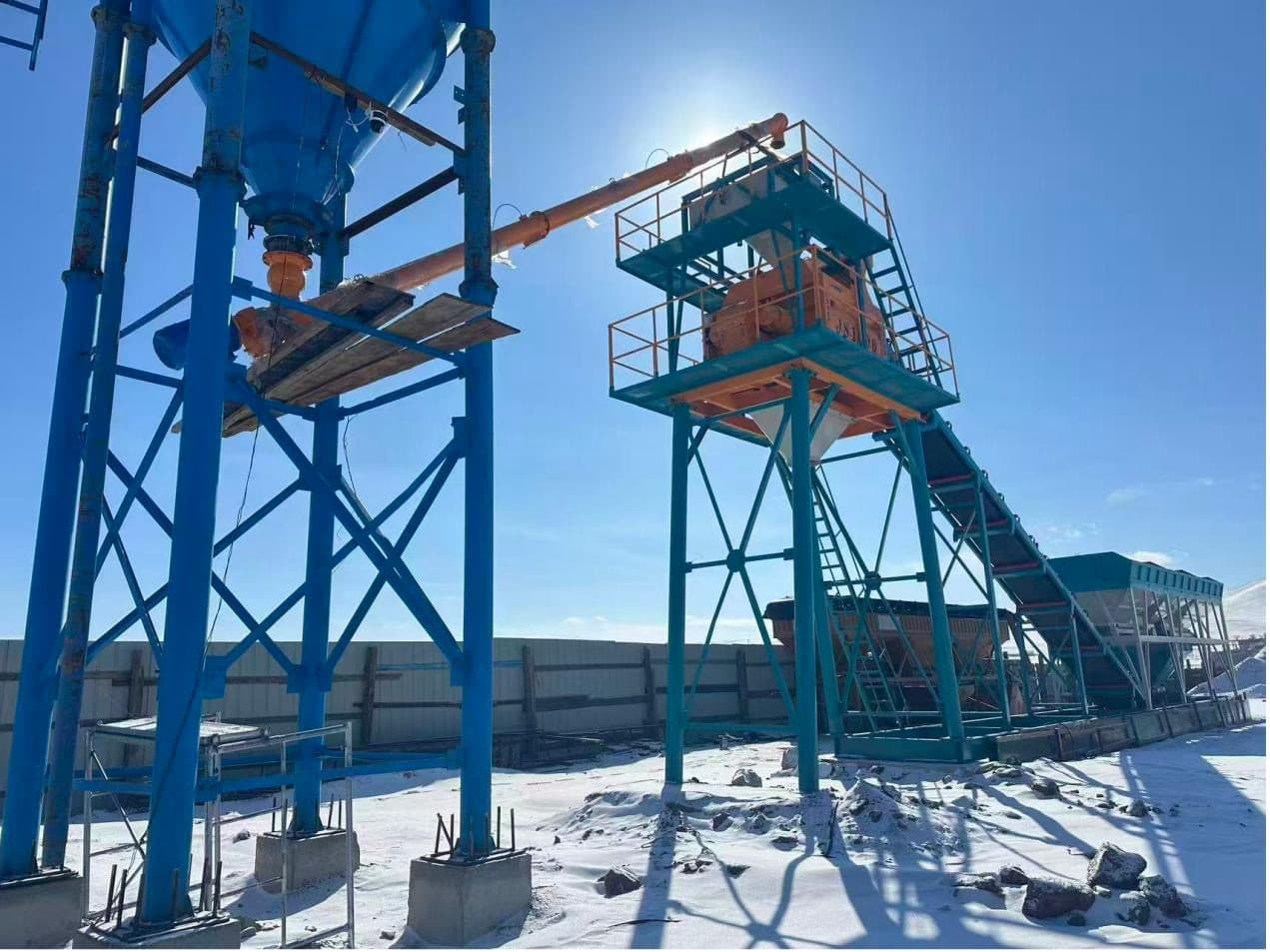
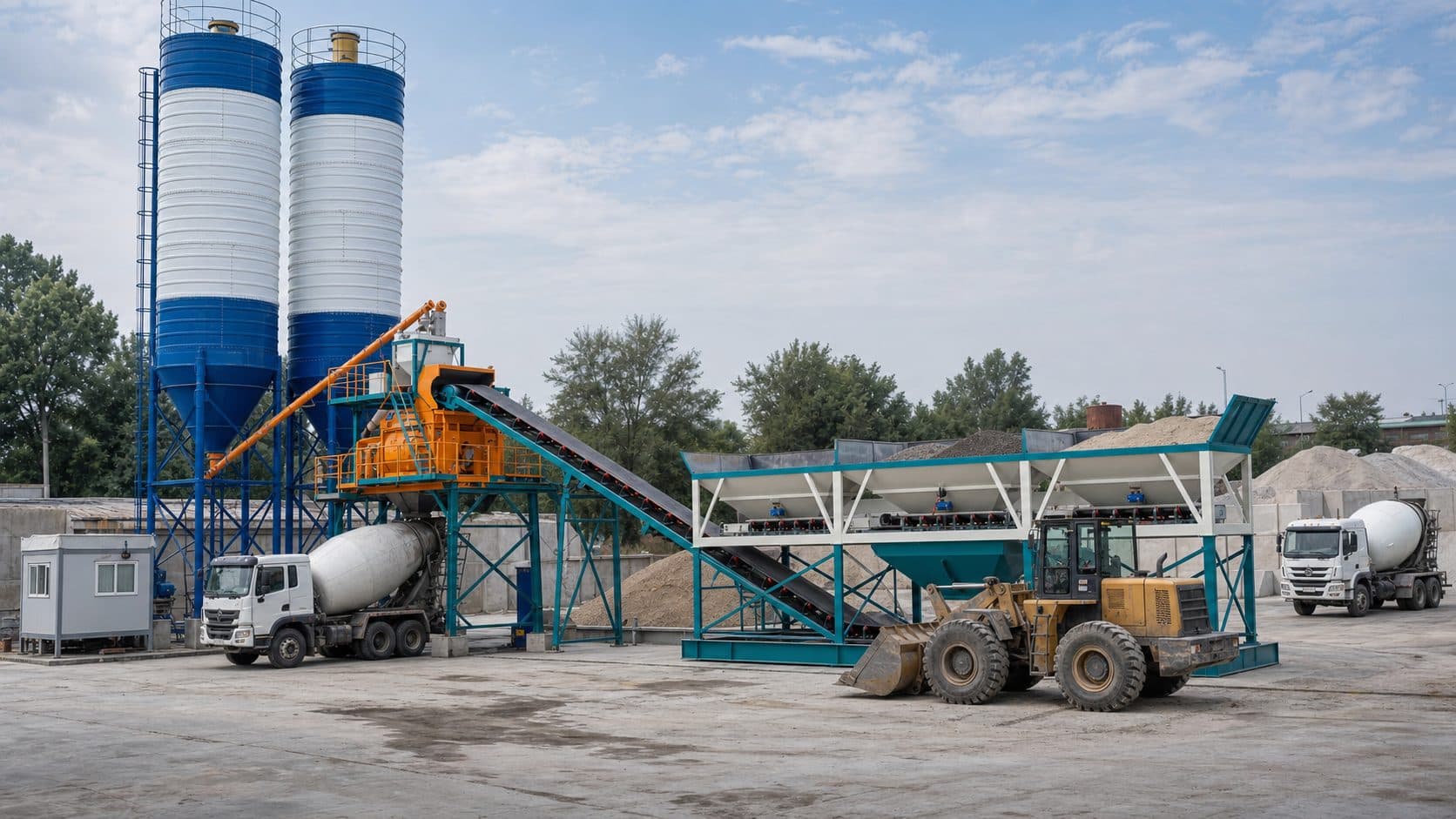
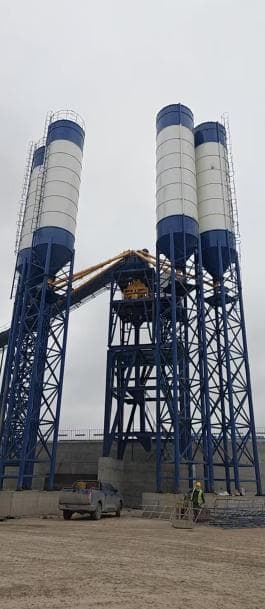
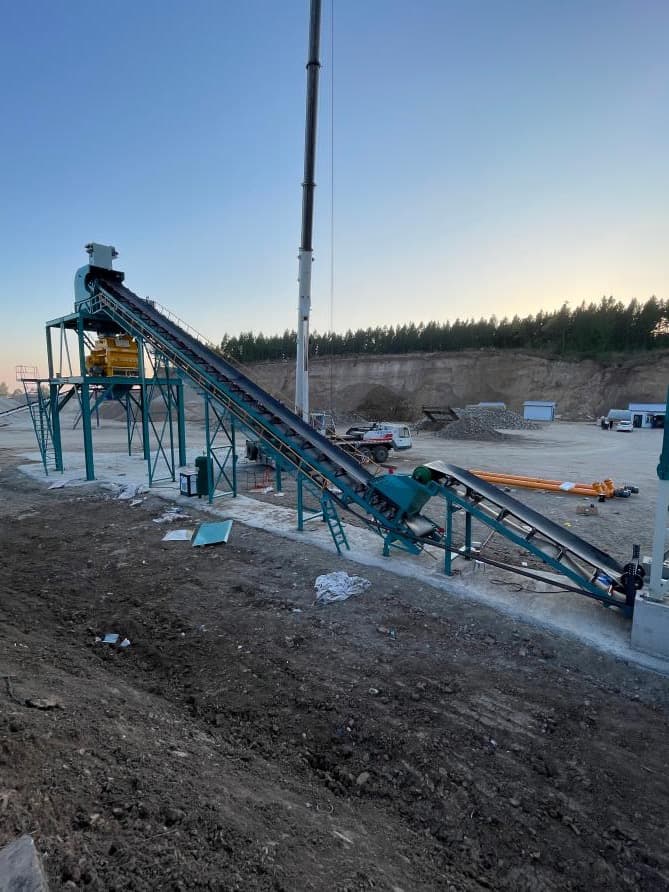
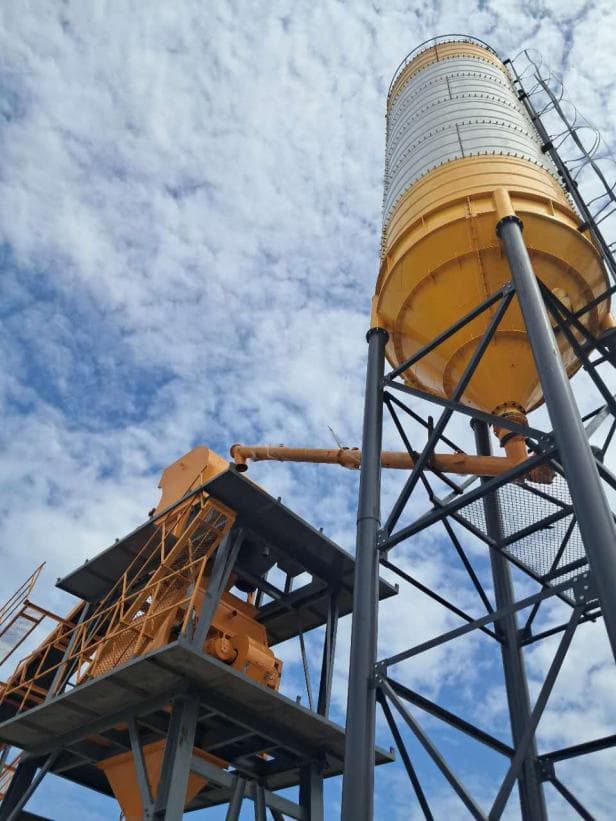
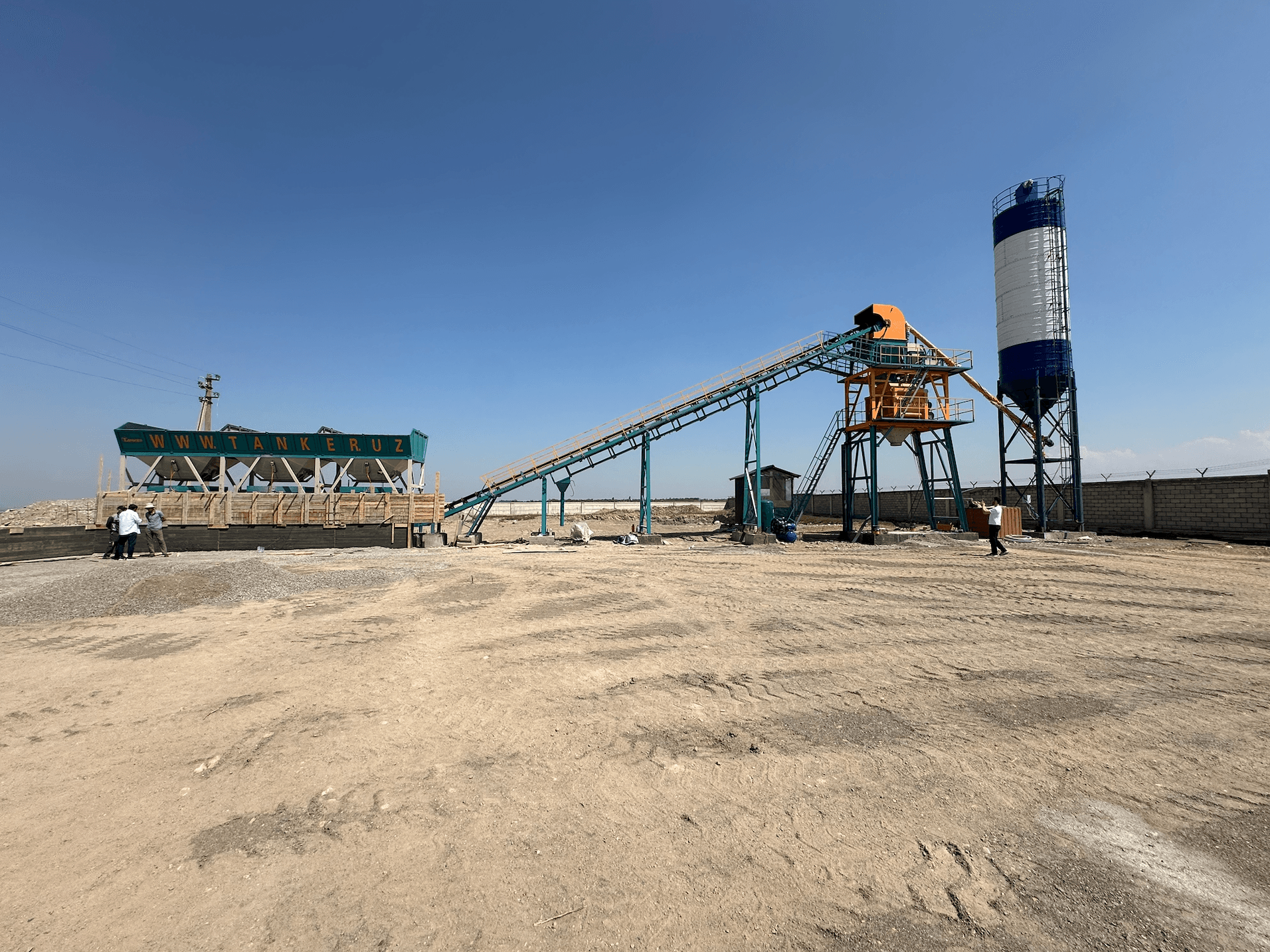
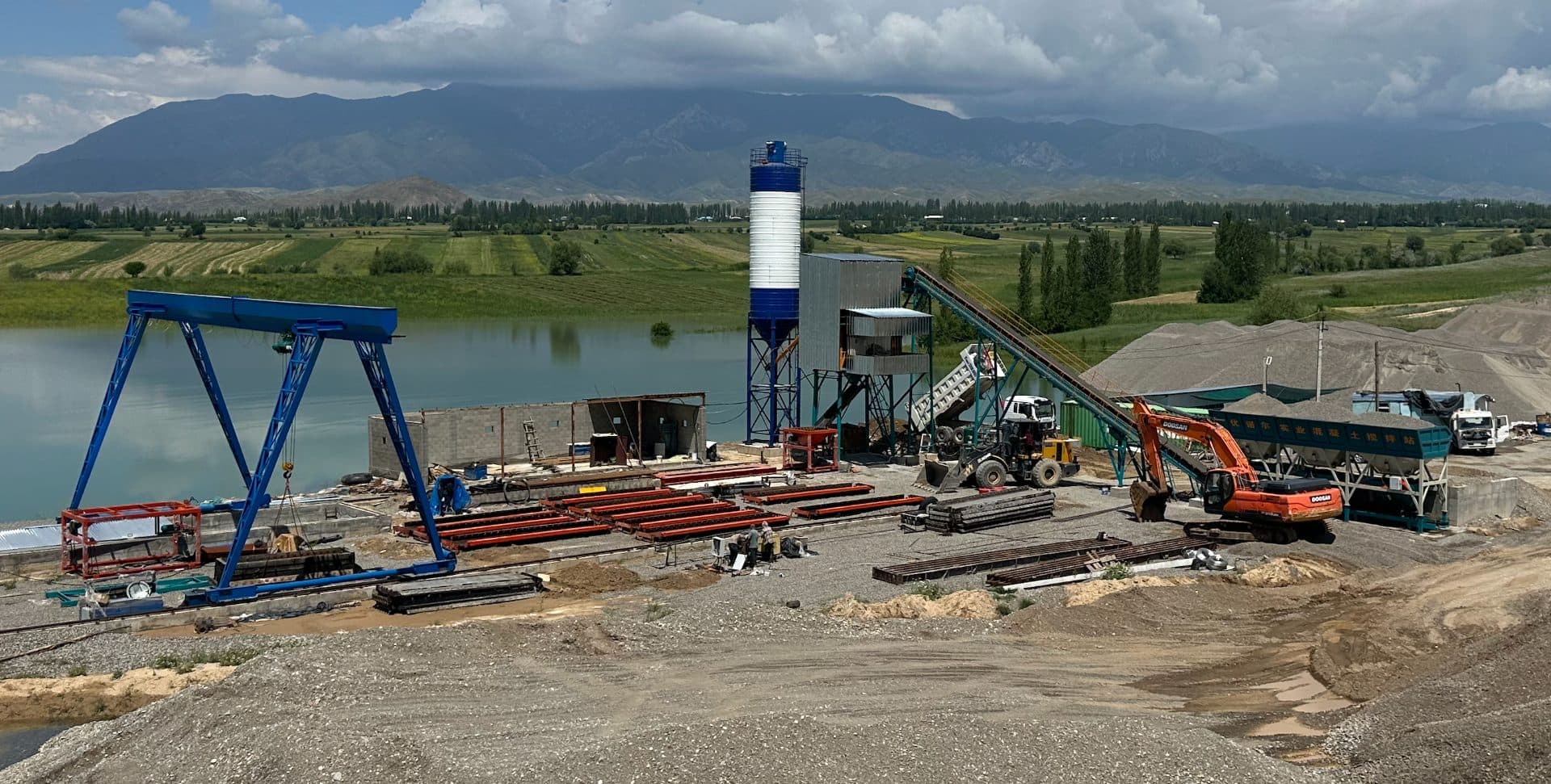
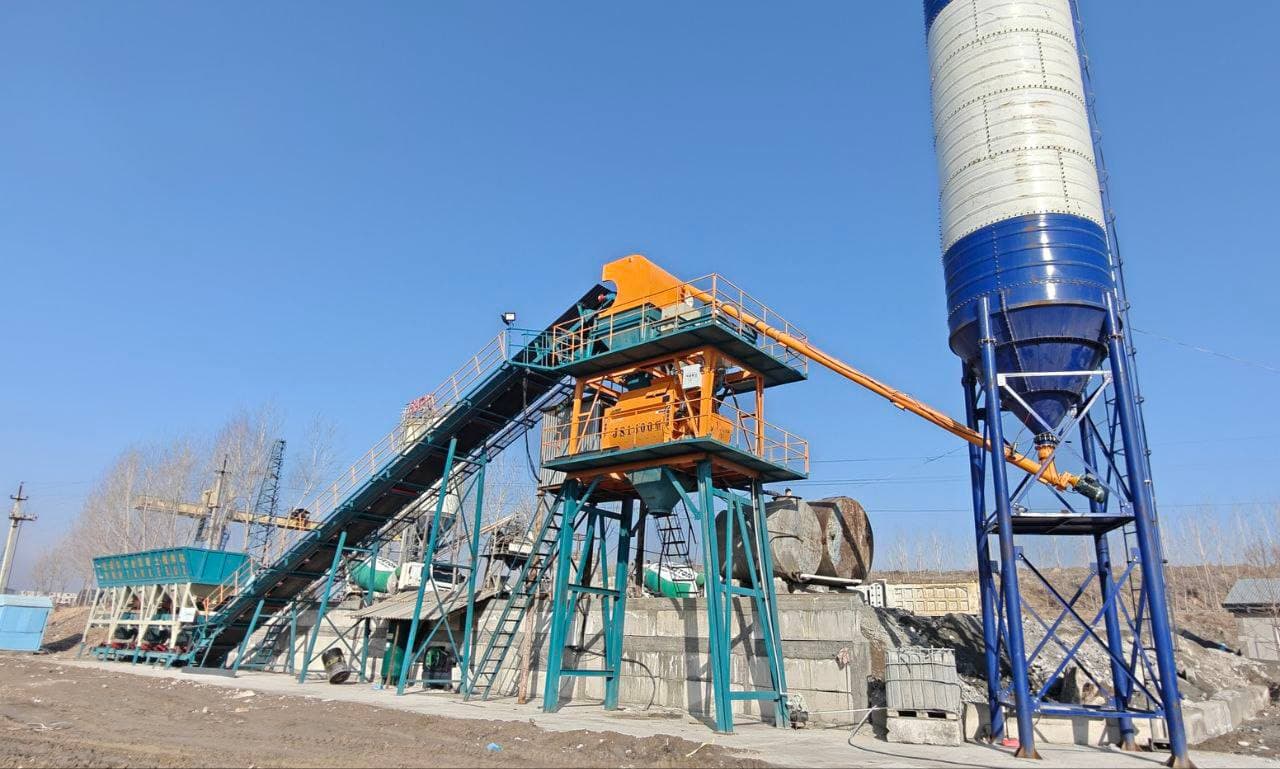
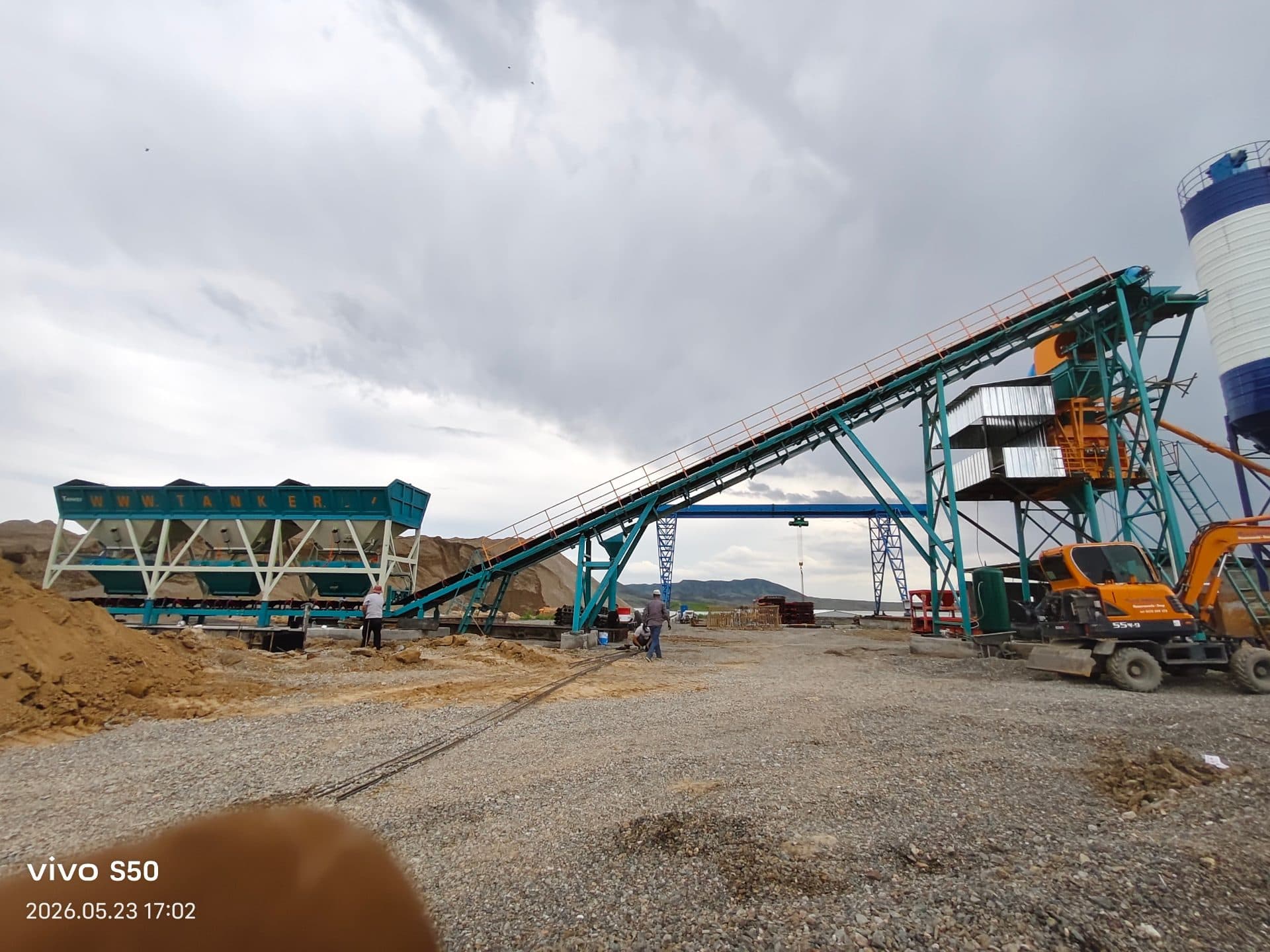
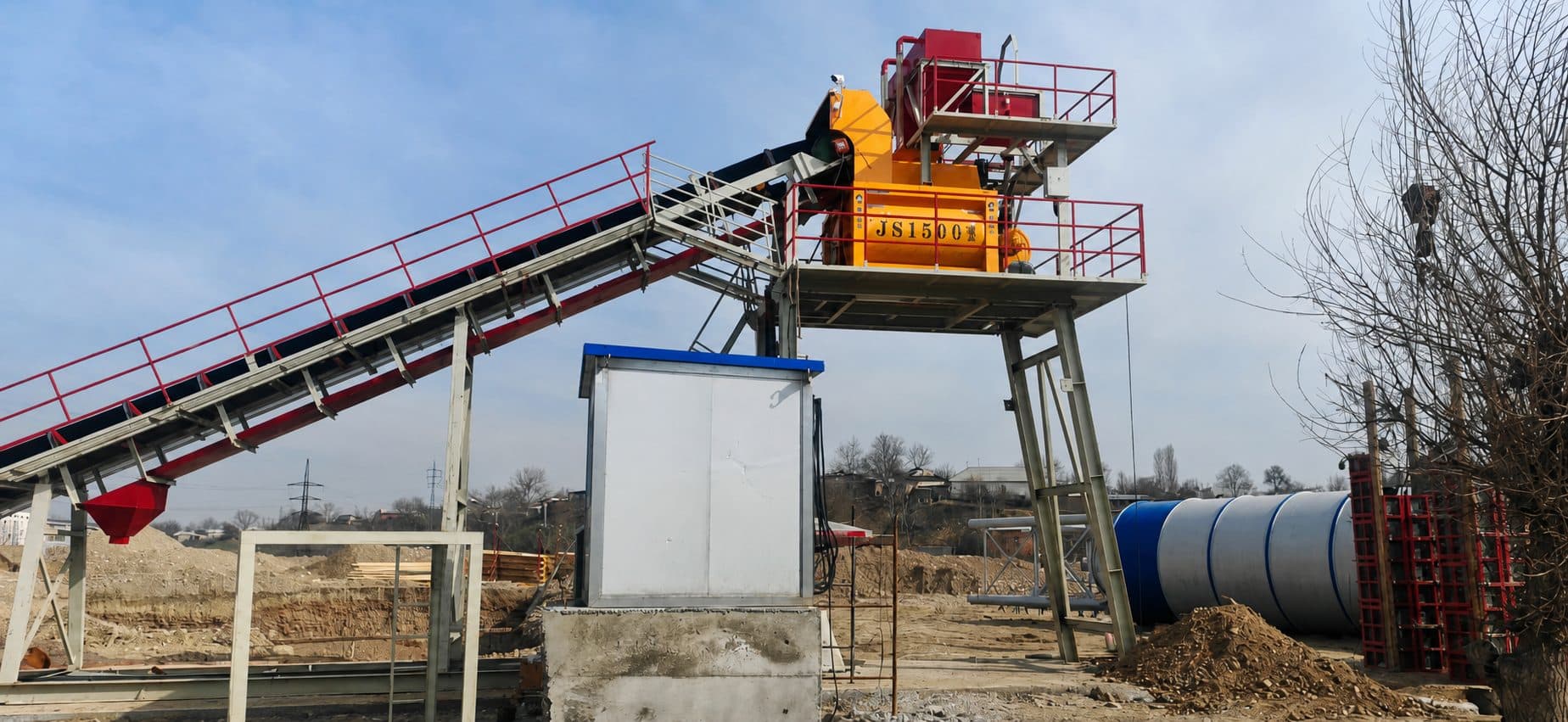
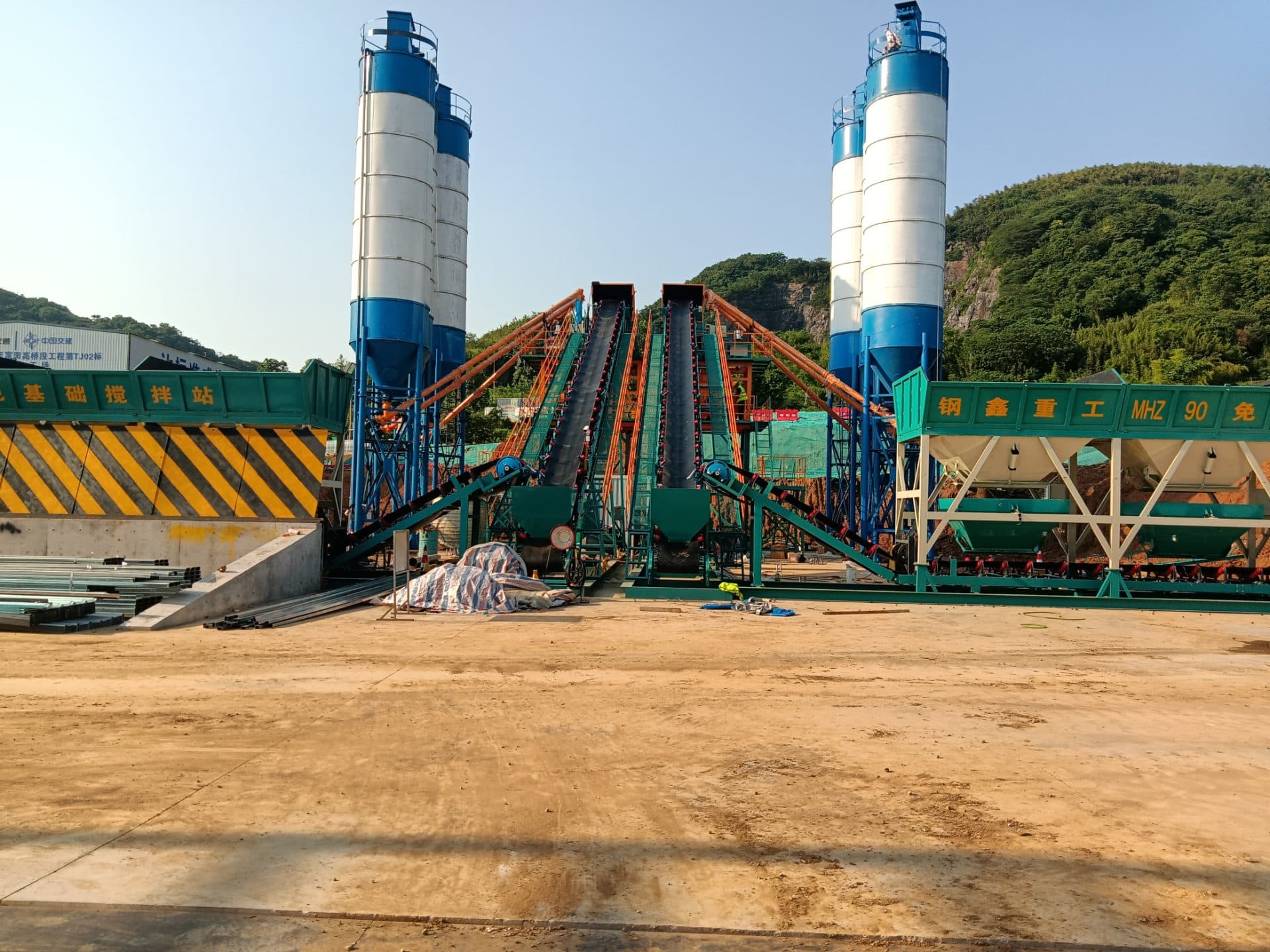
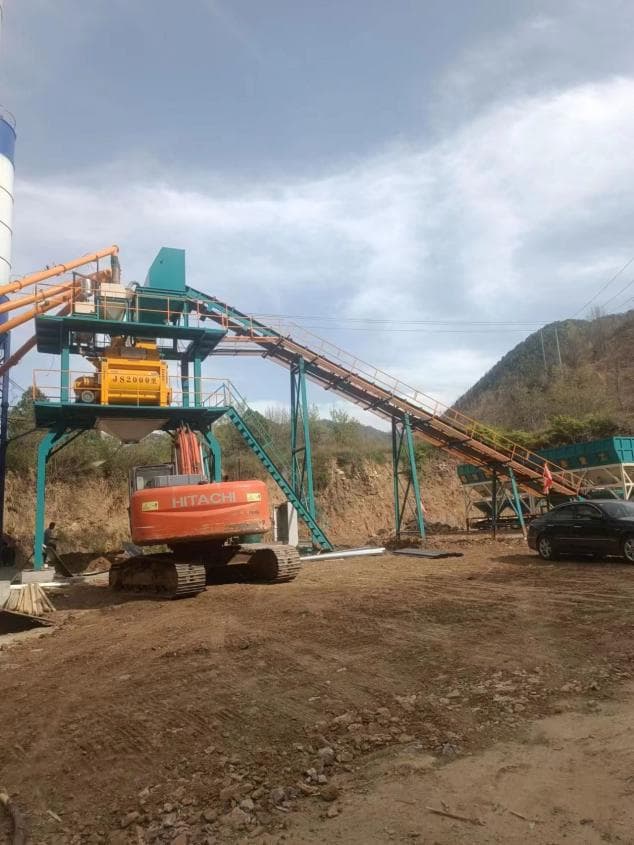
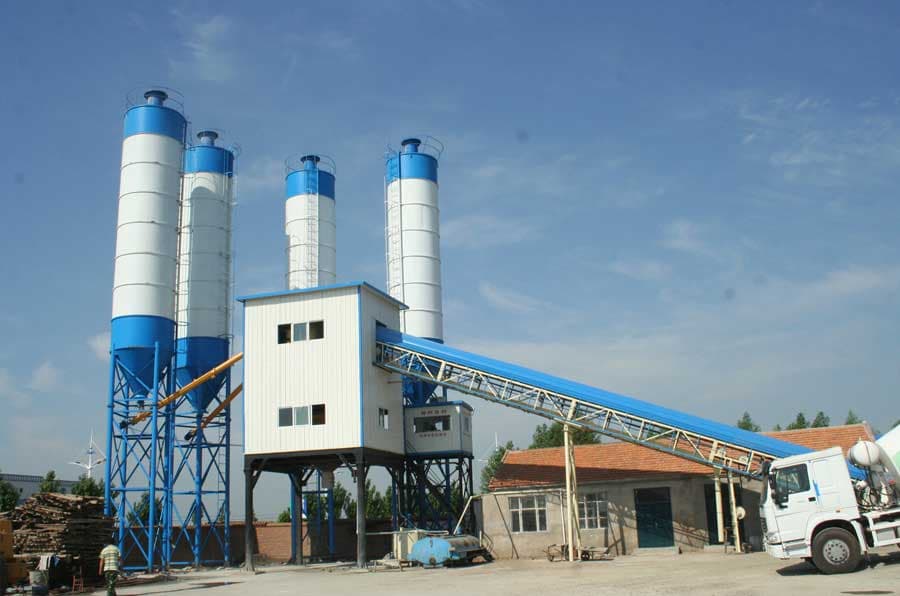
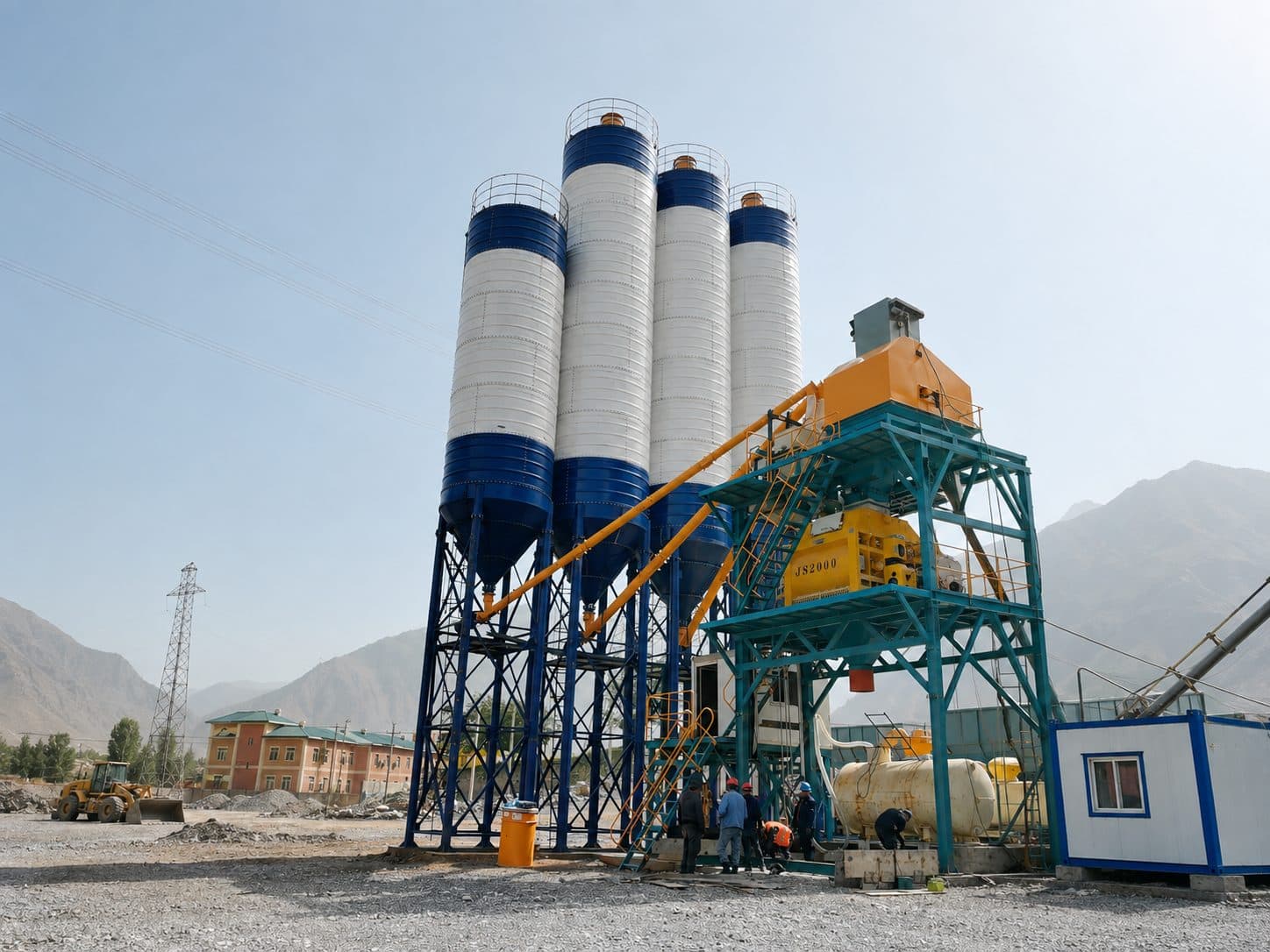
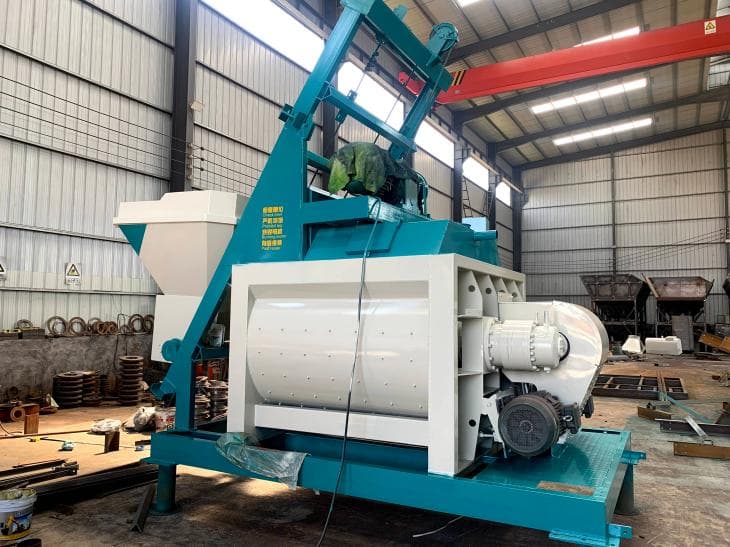
For a TANKER plant, recipe management, weighing, water and admixture channels, moisture correction and mixer performance should be considered together. The equipment supports repeatable execution but cannot guarantee B22.5 without a verified mixture and quality-control system.
Acceptance and strength control
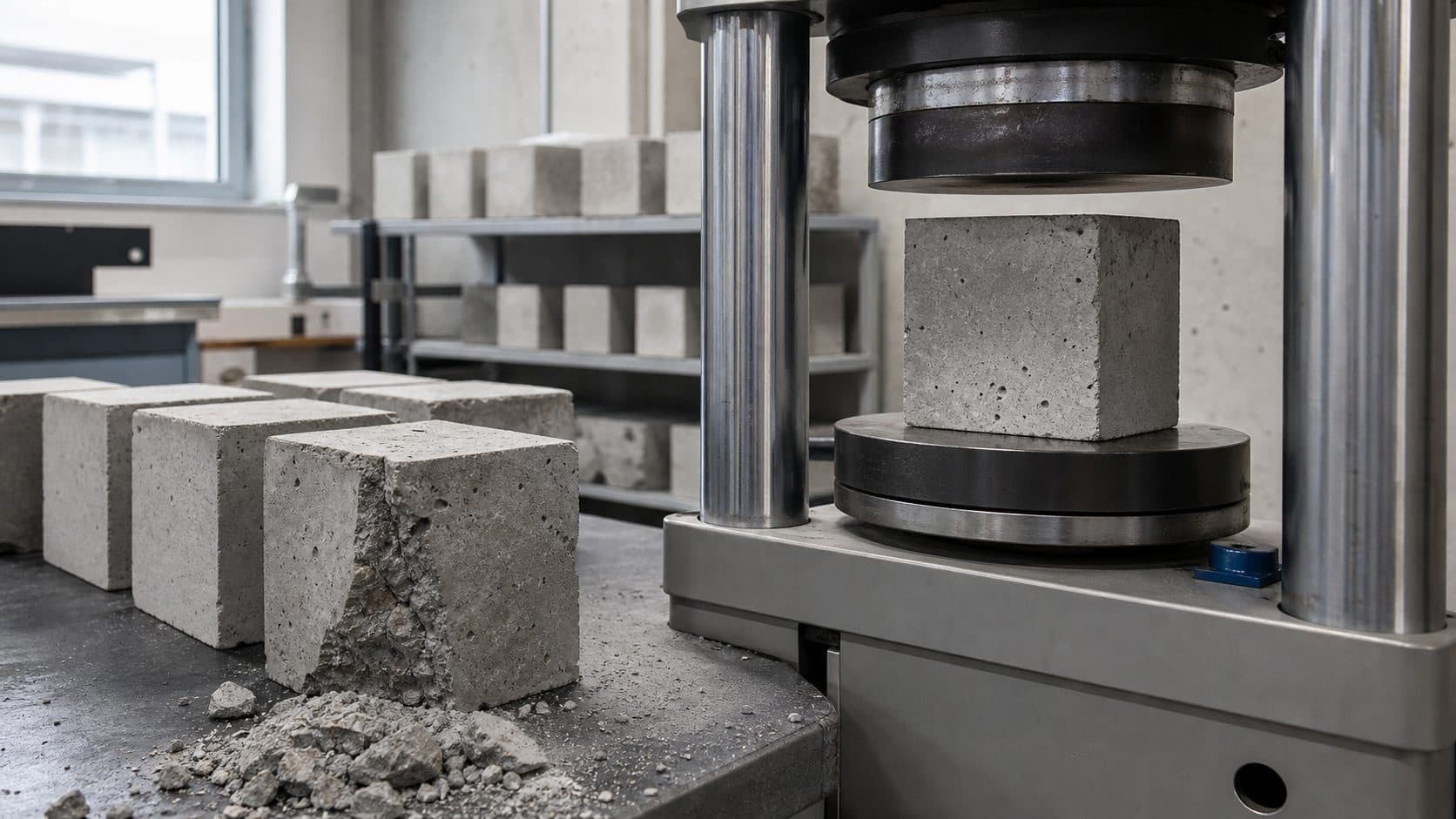
Fresh concrete is checked for workability, temperature and other specified properties. Representative samples are taken and specimens are prepared and cured in accordance with the applicable method. A seven-day result can help monitor strength development, but the acceptance age is defined by the project and standard; 28 days is commonly used.
Poor sampling, nonstandard specimen curing, freezing or overheating at the jobsite can misrepresent the concrete’s actual potential. Plant control and field testing therefore need a coordinated procedure.
Common errors
Error | Consequence | Correct approach |
|---|---|---|
Using one online recipe with any materials | Unstable strength and workability | Trials with the actual materials |
Ignoring sand moisture | Incorrect actual w/cm | Moisture measurement and water/mass correction |
Adding uncontrolled water for slump | Reduced strength and durability | Approved water balance or compatible admixture |
Relying only on cement quantity | Excess paste, heat and shrinkage | Complete mixture optimization and testing |
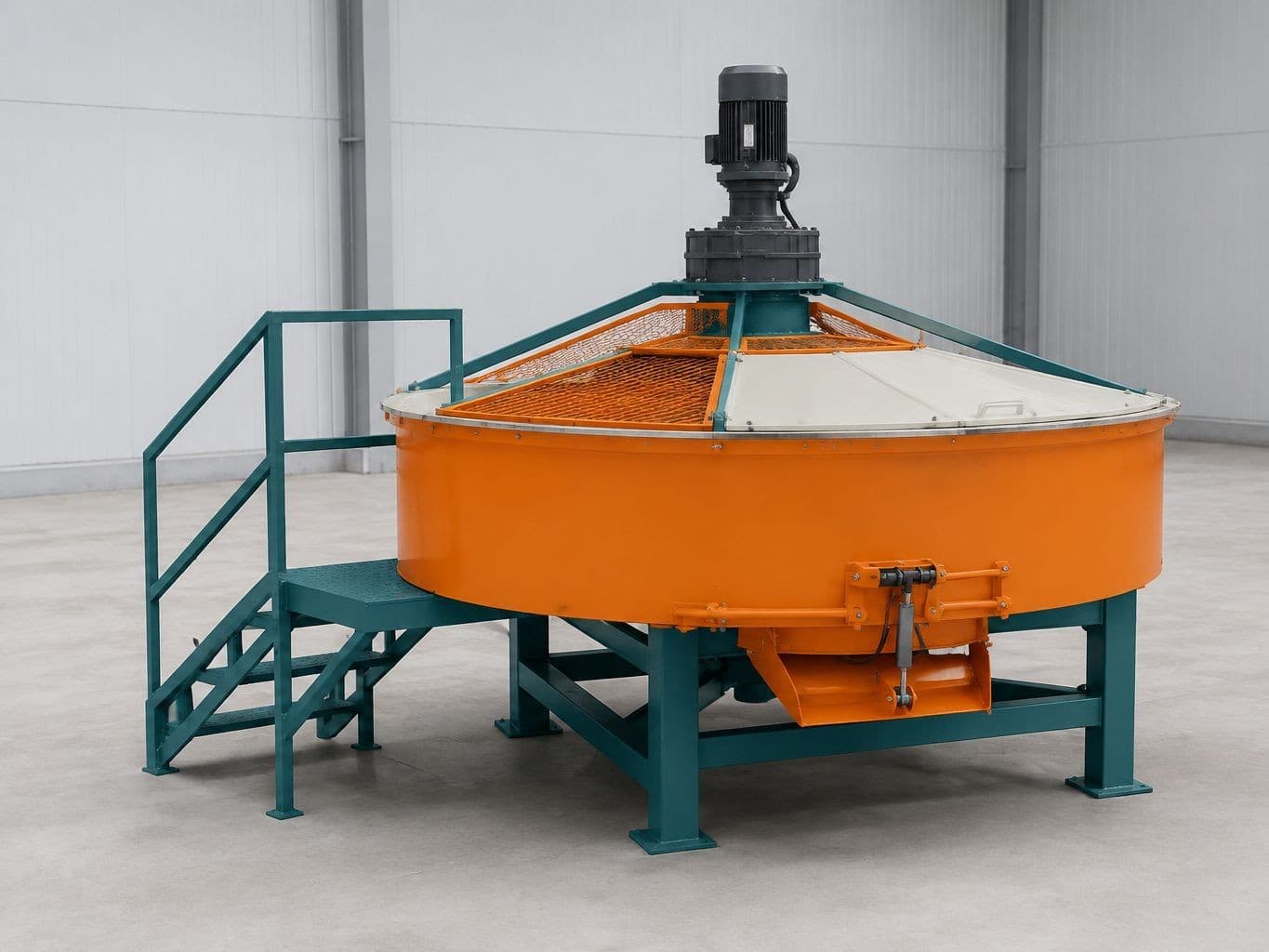
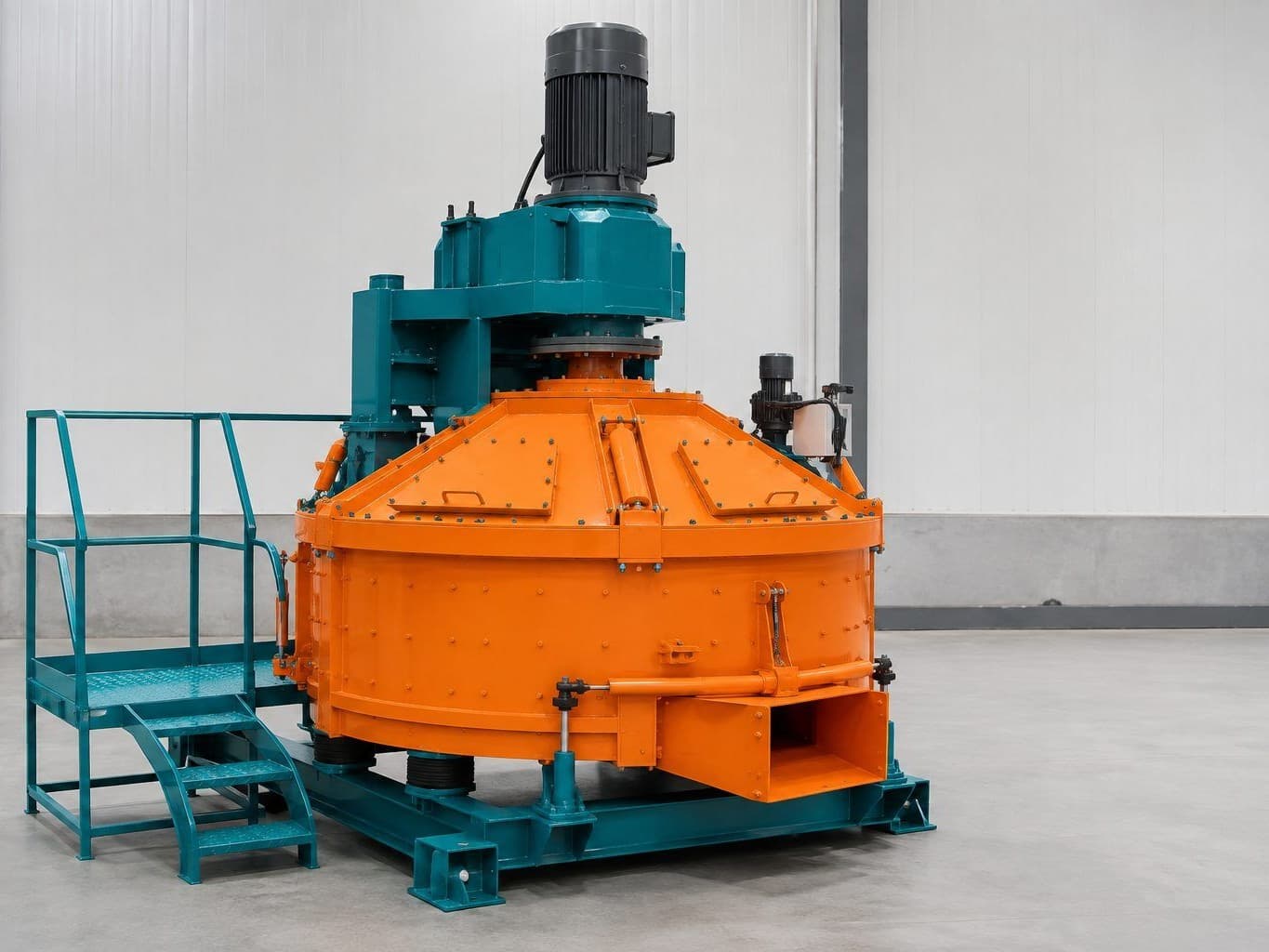
Insufficient mixing | Nonuniform concrete | Approved cycle and mixer-condition checks |
Incorrect specimen curing | Falsely low strength result | Standard specimen preparation and curing |
FAQ
Exactly how much cement is required for M300?
There is no universal quantity. Cement demand depends on cement performance, w/cm, aggregate grading, admixtures, required workability and exposure conditions. A laboratory must establish the mixture.
Does adding more cement guarantee B22.5?
No. Excess water, a moisture error, poor mixing, inadequate consolidation or curing can defeat a high cement content.
How can a plant’s ability to produce M300 be assessed?
Look beyond nominal capacity. Check weighing accuracy, moisture correction, water and admixture dosing, recipe access control, batch reporting, mixer uniformity and laboratory procedures.
Conclusion
M300 (B22.5) is a controlled performance result, not a single fixed recipe. Complete specifications, tested materials, trial batches, w/cm control, moisture correction, accurate batching and standardized verification must work together.
Inquiry: For a plant intended to produce B22.5 and other classes, provide hourly demand, mixture types, P/F/W requirements, aggregate properties, admixture circuits and the quality-control plan.