Why Must Sand and Aggregate Moisture Be Accounted For?
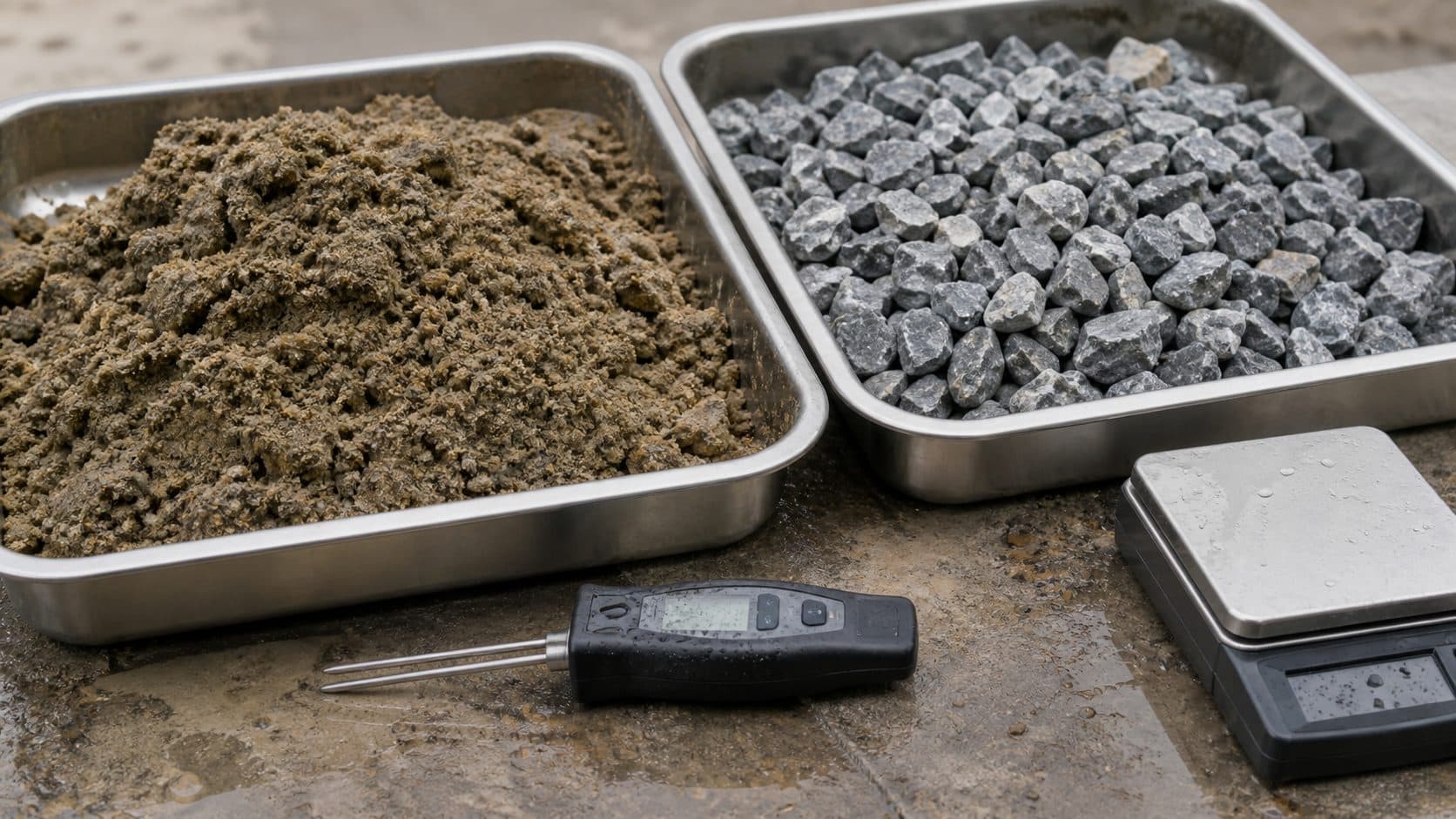
Laboratory concrete mixtures are normally proportioned for a defined aggregate condition, commonly SSD—saturated surface-dry. Production sand and coarse aggregate do not remain at that condition because rainfall, drainage, stockpile location and weather continually change their moisture. Sand can hold several percent of free surface water. If this water is ignored, it becomes an uncontrolled addition to the concrete mixture.
Four aggregate moisture conditions
Oven-dry
No water remains in the permeable pores. The aggregate can absorb part of the mixing water.
Air-dry
The surface is dry but the pores are only partly filled. The aggregate still absorbs water until it reaches SSD.
SSD
Saturated Surface-Dry means the permeable pores are filled but there is no free water on the particle surface. Many mixture calculations use this condition as the reference basis.
Wet
The pores are filled and additional free water is present on the surface. This free water contributes to total mixing water and must be deducted from the plant water addition.
Why are two corrections necessary?
It is not enough to reduce only the water setting. The plant must simultaneously:
correct added water by subtracting the free water carried by the aggregate; and
correct wet aggregate mass because part of the weight on the scale is water, not solid aggregate.
Reducing water without increasing wet sand mass delivers less solid sand than the SSD recipe requires. Increasing wet sand mass without reducing added water raises the actual w/cm.
Basic formulas
Moisture and absorption are normally expressed as percentages of oven-dry aggregate mass.
Oven-dry equivalent mass = SSD mass / (1 + absorption)
Wet batch mass = oven-dry mass × (1 + total moisture)
Free water = oven-dry mass × (total moisture − absorption)
Percentages are entered as decimals. If total moisture is lower than absorption, the aggregate contributes no free water and may instead absorb some mixture water.
Calculation example
This example demonstrates the correction principle and is not a concrete recipe.
Assume the laboratory recipe requires 1,000 kg of SSD sand. Absorption is 1% and measured total moisture is 5%:
Oven-dry equivalent:
1000 / 1.01 = 990.1 kg.Wet sand to be weighed:
990.1 × 1.05 = 1039.6 kg.Free water carried by the sand:
990.1 × (0.05 − 0.01) = 39.6 kg, approximately 39.6 L.
The plant therefore weighs about 1,039.6 kg of wet sand to retain the 1,000 kg SSD quantity and reduces the metered water by about 39.6 kg. Production values are rounded according to laboratory data, batching accuracy and applicable requirements.
What does a moisture error change?
actual water-to-cementitious-materials ratio;
slump and pumpability;
bleeding, segregation and uniformity;
compressive strength and result variability;
concrete yield and material balance per cubic metre;
finishing, setting and durability;
risk of incorrect cement or admixture adjustments.
Sand usually holds more surface moisture than coarse aggregate. A small percentage change in sand moisture can therefore introduce a significant quantity of water into one batch.
When should moisture be measured?
The frequency follows the producer’s quality plan and material variability. It should be checked before production and repeated whenever aggregate condition changes, particularly:
after rain or snow;
when a new material delivery arrives;
when material is taken from another stockpile zone;
as drainage and solar drying change moisture during the day;
when fresh-concrete workability changes unexpectedly;
when a probe reading differs from a laboratory result.
Documented periodic checks remain necessary even during stable production. Plants with rapid variation may combine continuous probes with frequent laboratory verification.
Measurement methods
mass loss by oven drying or an approved rapid-drying method;
standard field determination of surface moisture in fine aggregate;
electrical or microwave probes installed in aggregate bins;
rapid moisture meters used on a representative sample.
An automatic probe is not a “fit and forget” device. It must be installed in a representative material flow, calibrated against a reference test for the specific aggregate, kept clean and verified periodically.
How automatic correction works
The probe or operator enters the moisture of each aggregate.
The control system converts the approved SSD recipe into wet batch masses.
Free moisture is deducted from the total water balance.
Corrected sand, coarse aggregate and water targets are sent to the weighing systems.
Actual quantities are stored in the batch report.
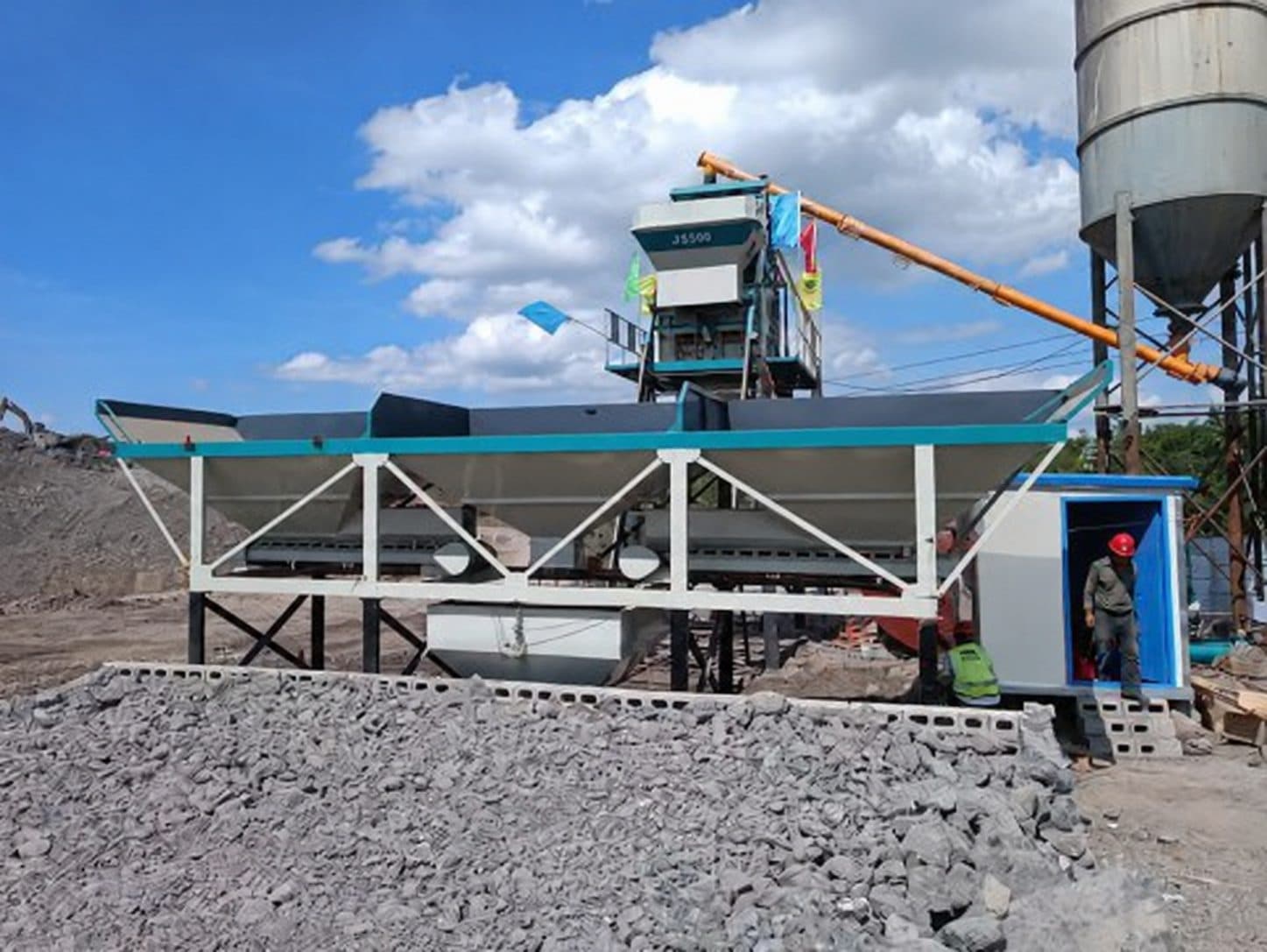
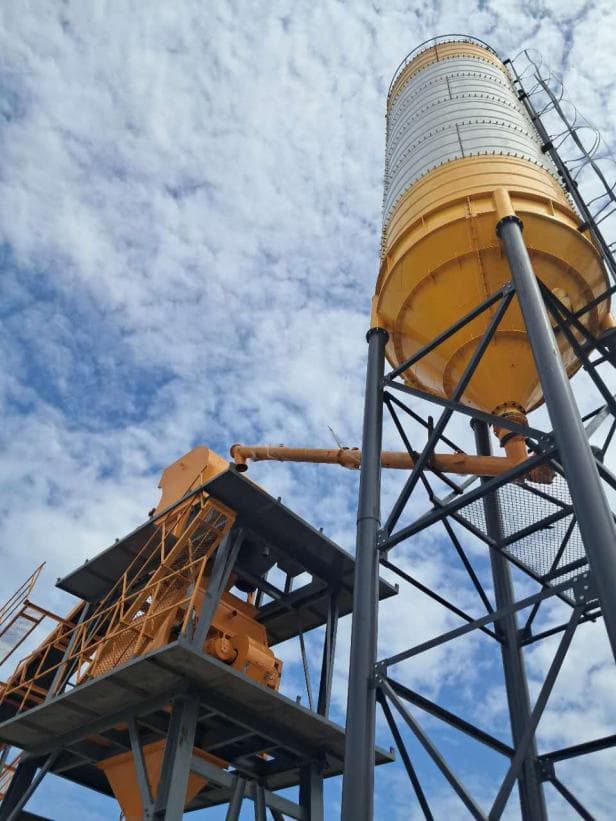
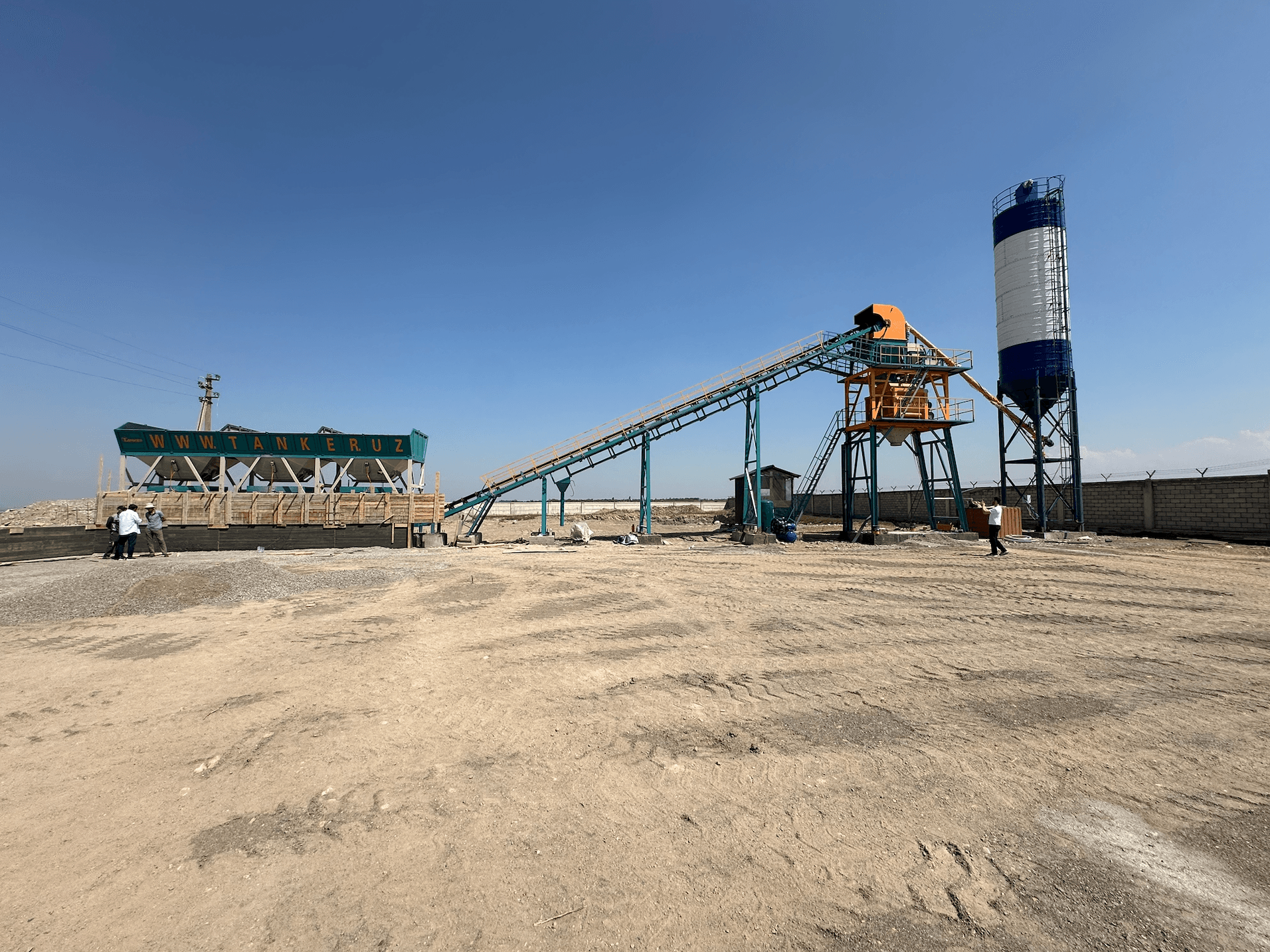
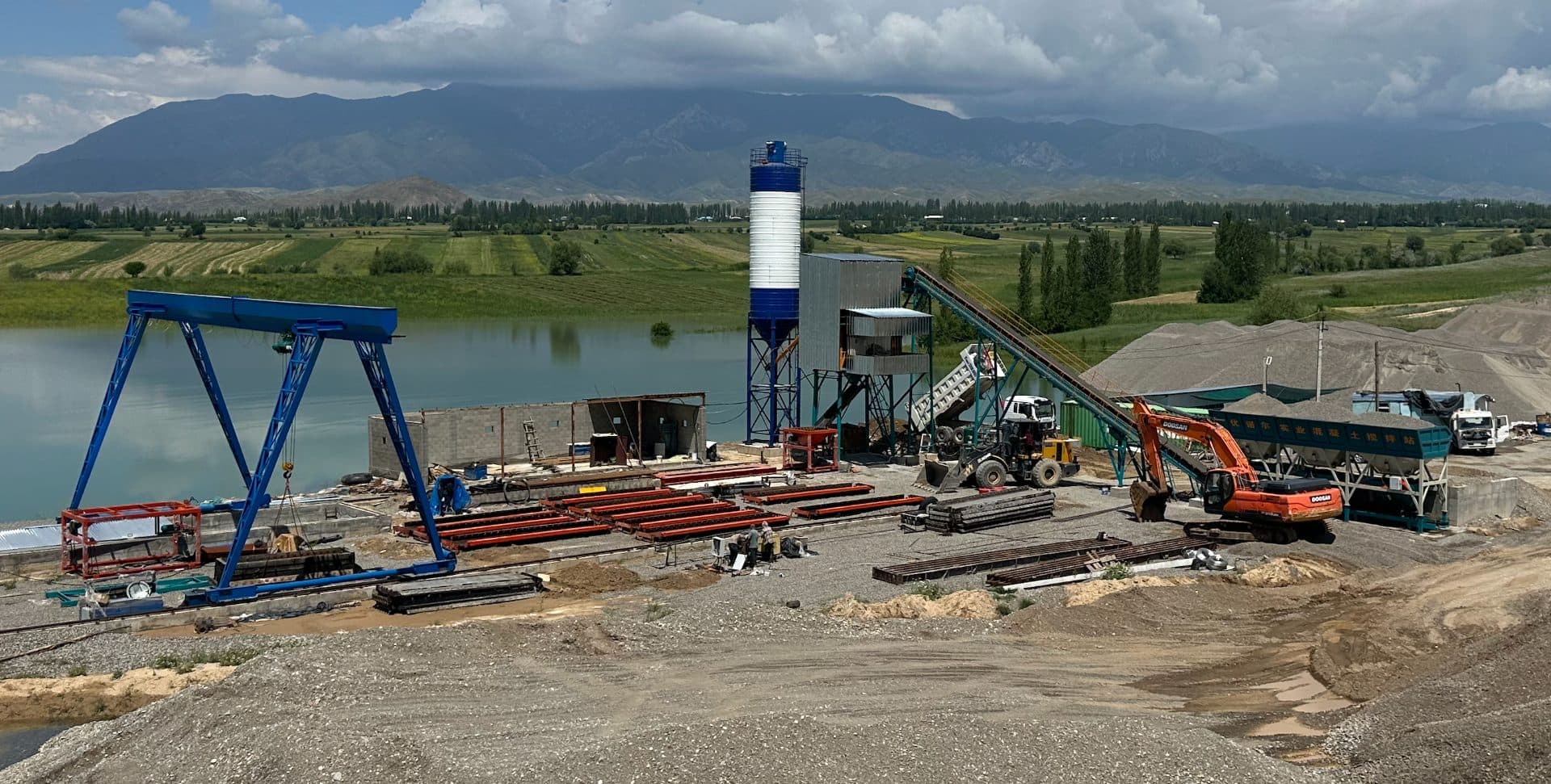
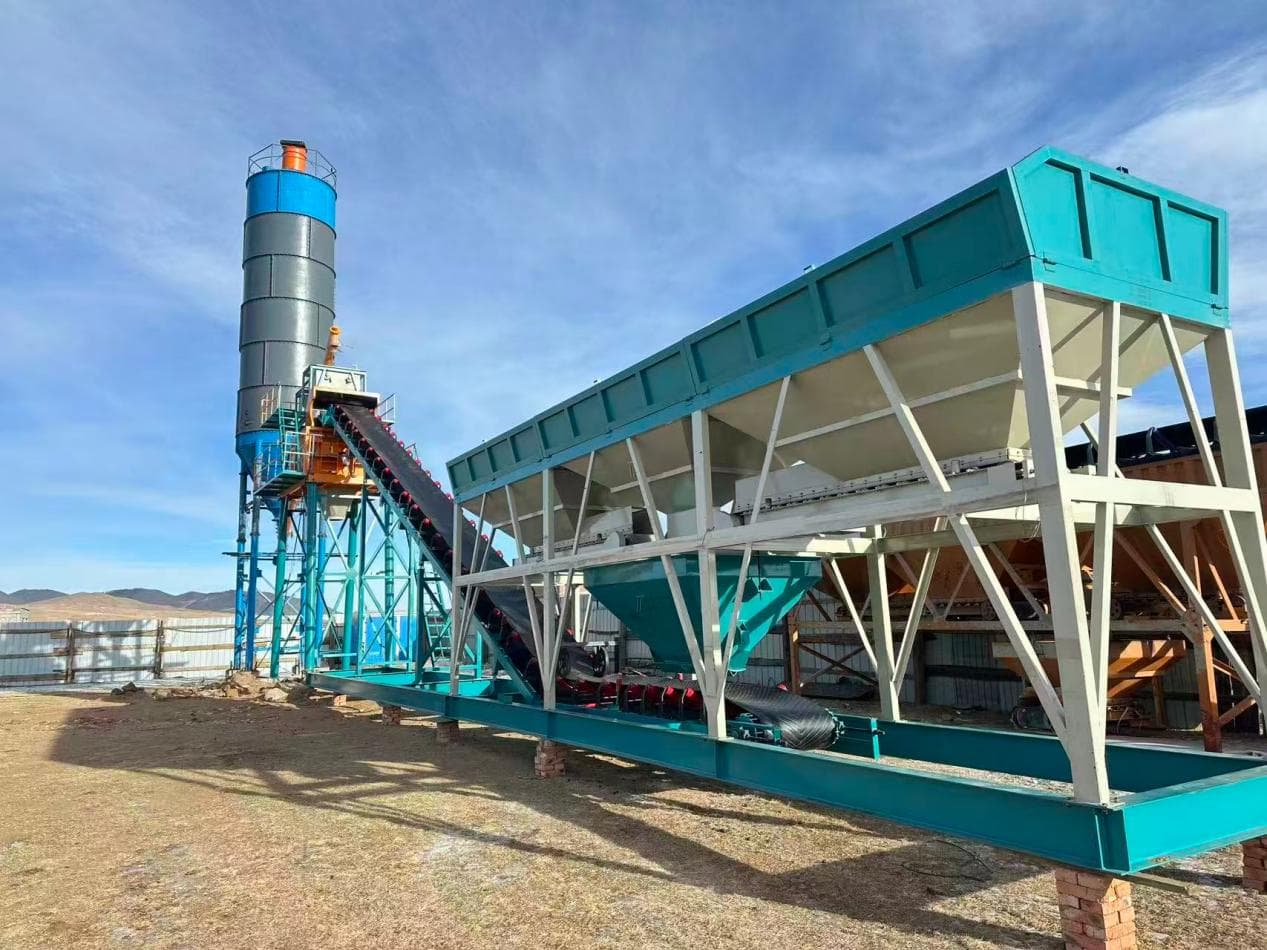
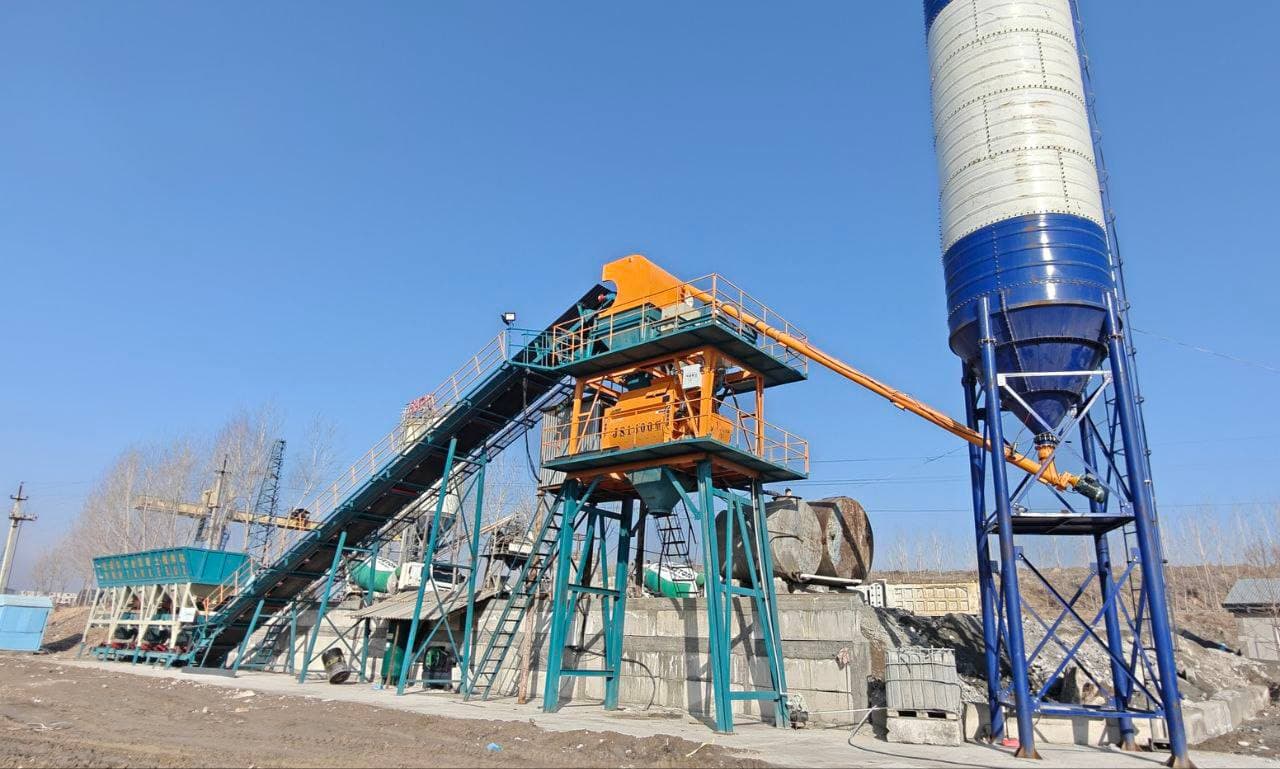
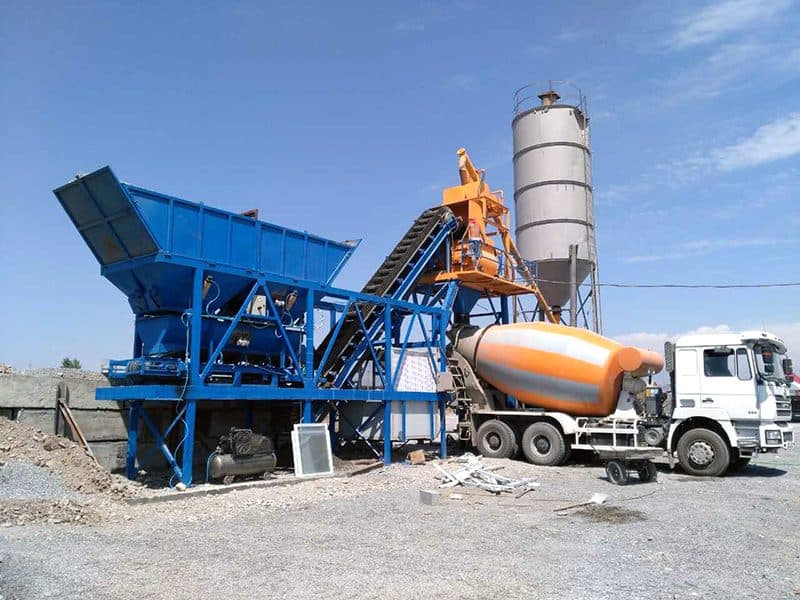
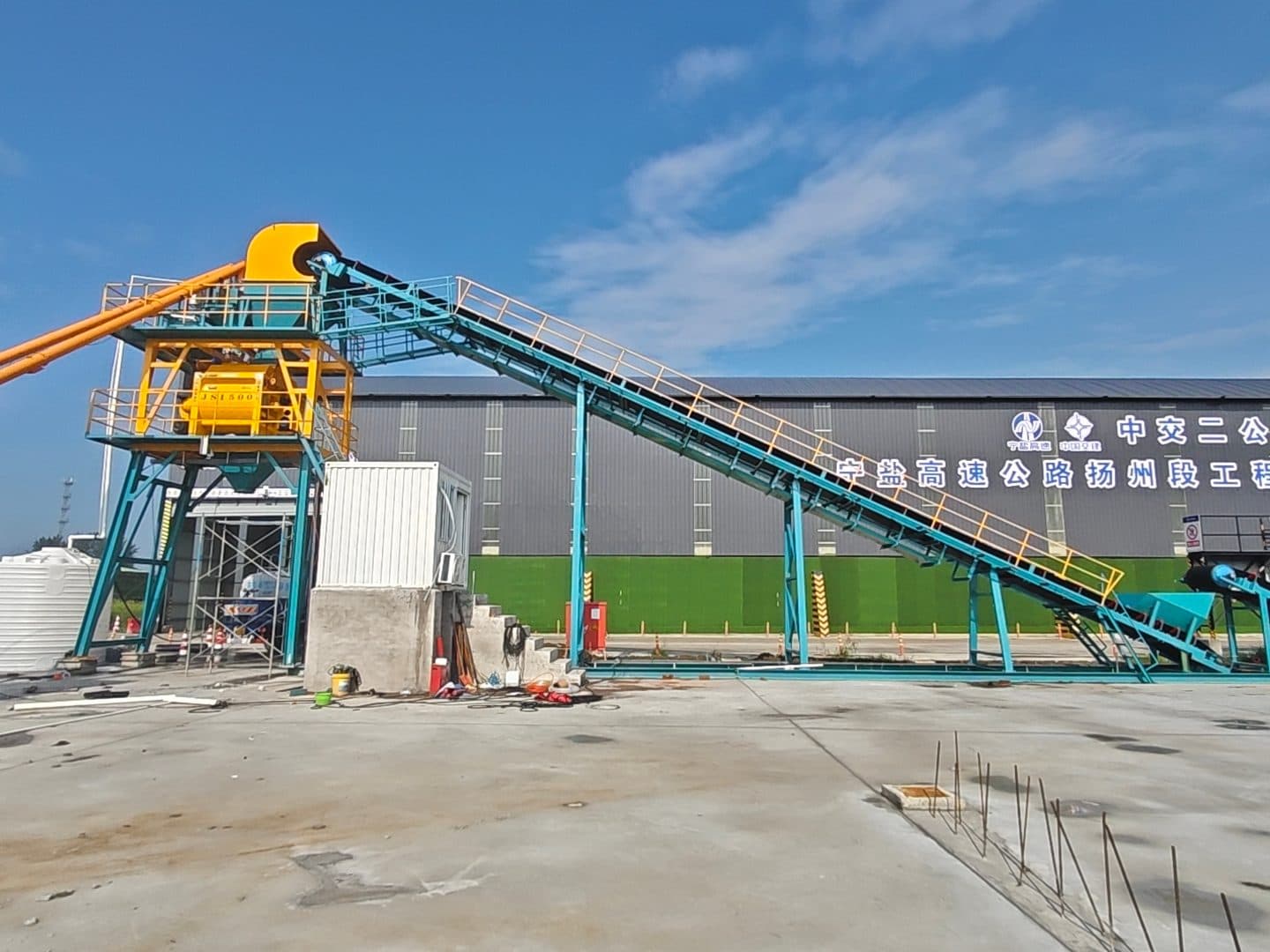
For a TANKER plant, moisture correction, bin probes, weighed water and production reporting are configured according to project needs. A probe alone does not guarantee quality; representative sampling, calibration and laboratory checks remain necessary.
Operator checklist
Obtain absorption values for every aggregate source.
Ensure the sample represents material actually entering the bin.
Do not confuse total moisture with free moisture.
Correct water and wet aggregate mass together.
Do not reuse an old moisture value after rainfall.
Compare probe readings with periodic drying tests.
Record manual corrections in the batch report.
When slump changes unexpectedly, check moisture and the water balance before assuming a cement problem.
FAQ
Must coarse-aggregate moisture also be corrected?
Yes. Sand often has the larger effect, but wet or unusually dry coarse aggregate also changes the water balance and solid quantity.
Does a moisture probe replace the laboratory?
No. The probe provides rapid process control; a reference drying test is needed for calibration and verification.
Is reducing added water sufficient?
No. The wet aggregate mass must also be corrected, or the amount of solid material in the mixture will change.
Conclusion
Sand and coarse-aggregate moisture are among the most important daily variables in concrete production. Correct moisture control adjusts both the water balance and the aggregate mass, helping maintain stable w/cm, workability, yield and strength from batch to batch.
Inquiry: For a plant with moisture control and automatic recipe correction, provide the aggregate fractions, storage method, climate, expected moisture variation and available laboratory facilities.